
Una and Arataca (forest)
Basic information
Sample name: Una and Arataca (forest)
Reference: C. R. Cassano, J. Barlow, and R. Pardini. 2012. Large mammals in an agroforestry mosaic in the Brazilian Atlantic forest. Biotropica 44(6):818-825 [ER 2078]
Geography
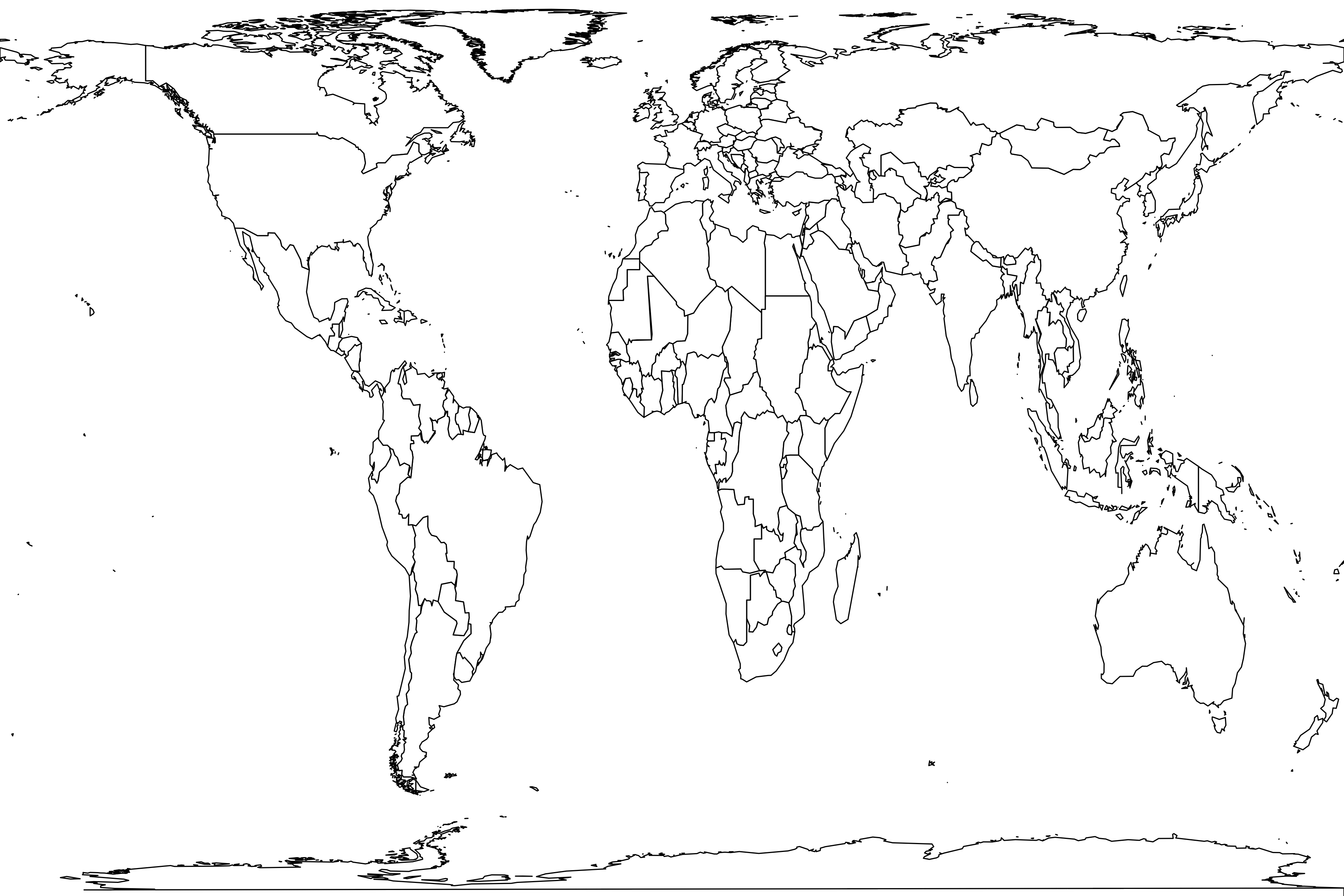
Country: Brazil
State: Bahia
Coordinate: 15° 9' 0" S, 39° 14' 30" W
Latlng basis: stated in text as range
Geography comments: "in a landscape encompassing part of the municipalities of Una and Arataca (~60 km2; between 39°5′–39°22′ W and 15°4′–15°14′ S)... The study sites were located in farms around and between two protected areas: the Una Biological Reserve in the east, and the Serra das Lontras National Park in the west"
Environment
Habitat: tropical/subtropical moist broadleaf forest
Substrate: ground surface
MAT: 24.0
MAP: 1800.0
Habitat comments: "largely covered by mature and late secondary forest (roughly 50% of the area—see Fig. S1). The original vegetation is Southern Bahian Wet Forest... The region lacks a distinct dry season, although a warmer and rainless period occasionally occurs between December and March... Thirty-eight percent of the agroforestry mosaic outside the reserves is covered by old-growth forests that suffered different levels of selective logging in the past, and 21, 20, and 10 percent are covered by cabruca, pasture and permanent monocultures, respectively"
Methods
Life forms: carnivores, primates, rodents, ungulates, other large mammals, other small mammals
Sites: 9
Sampling methods: automatic cameras
Sample size: 1032 captures or sightings
Years: 2007 - 2009
Nets or traps: 18
Net or trap nights: 1895
Camera type: analog
Cameras paired: no
Trap spacing: 4.35
Basal area status: not applicable
Sampling comments: "We sampled 18 sites located in nine blocks, each composed of a cabruca site and an adjacent forest site, 200–450 m apart from each other... blocks were at least 2.5 km from each other (distances varied from 2.5 to 6.2 km)... Within each block cabruca and forest sites were located to guarantee at least 200 m between them (dis- tance varied from 200 to 450 m)" (cabrucas are "cacao plantations shaded by native trees") ; "Two camera-traps (analog Trapacamera—http://www.trapacamera.com) were placed in each site, one on the ground and one in the understory (3–4 m above ground level), 50–100 m apart from each other... Data collection occurred during four sampling sessions when all sites were sampled, representing two times of the year in two different years (July–October of 2007 and 2008, and January– April of 2008 and 2009)... During each of the four sampling sessions, three cabruca-forest pairs were sampled simultaneously for four consecutive weeks and checked weekly to exchange film and re-bait"
Metadata
Sample no: 2019
Contributor no: John Alroy
Enterer: John Alroy
Created: 2016-05-25 12:56:58
Modified: 2016-05-25 03:00:13
Abundance distribution
Each square represents a species. Square sizes are proportional to counts. Values are logged.
Statistics
17 species
4 singletons
total count 1032
geometric series index: 24.9
Fisher's α: 2.891
geometric series k: 0.6817
Hurlbert's PIE: 0.6612
Shannon's H: 1.4487
Good's u: 0.9961
Register
| Didelphis aurita (big-eared opossum) | 36 | 1.1 kg |
| Cuniculus paca | 10 | |
| Dasyprocta aff. leporina | 1 | |
| Cabassous sp. | 4 | |
| Dasypus novemcinctus (nine-banded armadillo) | 6 | 4.4 kg |
| Callithrix kuhlii (Wied's marmoset) | 460 | |
| Sapajus xanthosternos (golden-bellied capuchin) | 3 | |
| "Cebus xanthosternos" | ||
| Leontopithecus chrysomelas (golden-headed lion tamarin) | 379 | 639.0 g |
| Cerdocyon thous (crab-eating fox) | 17 | 5.2 kg |
| Eira barbara (tayra) | 44 | 4.3 kg |
| Leopardus sp. | 1 | |
| Nasua nasua (South American coati) | 31 | 4.4 kg |
| Potos flavus (kinkajou) | 4 | 1.7 kg |
| Procyon cancrivorus (crab-eating raccoon) | 13 | 5.0 kg |
| Mazama sp. | 1 | |
| Canis lupus familiaris (gray wolf) | 21 | 43.0 kg |
| "Canis familiaris" | ||
| Felis catus (domestic cat) | 1 | |