
Bharatpur and Jagannathprasad
Basic information
Sample name: Bharatpur and Jagannathprasad
Sample aka: Chandaka-Dampara Wildlife Sanctuary
Reference: S. Debata and K. K. Swain. 2020. Mammalian fauna in an urban influenced zone of Chandaka-Dampara Wildlife Sanctuary in Odisha, India. Journal of Threatened Taxa 12(8):15767-15775 [ER 3348]
Geography
Country: India
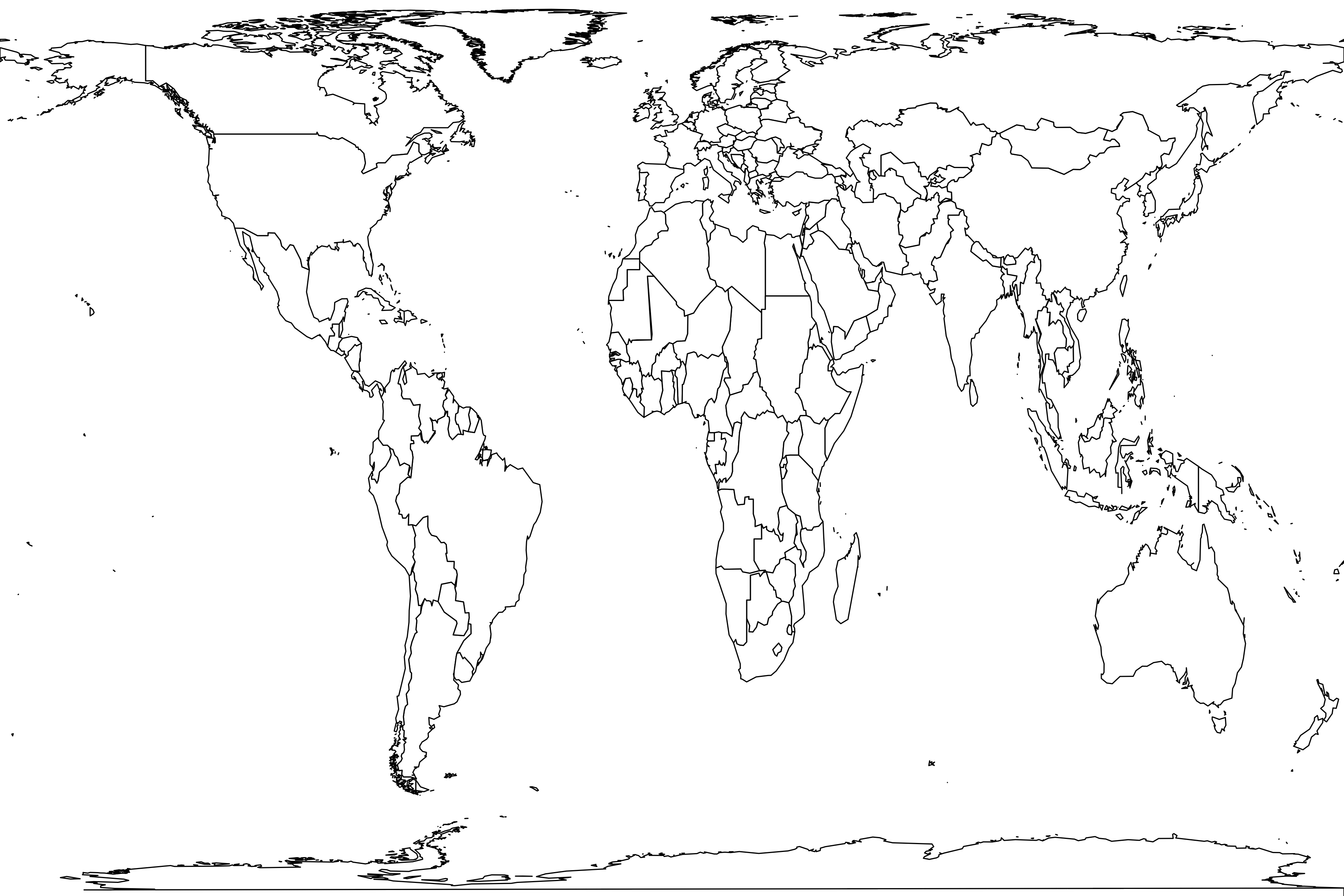
State: Odisha
Coordinate: 20.323° N, 85.783° E
Latlng basis: stated in text as range
Geography comments: "an area of 193.39km2 is situated in Khurda District adjoining Bhubaneswar... The sanctuary exists in two different parts; the major part contains an area of 172.12km2 while the other part, Bharatpur-Jagannathprasad sector is 19.27km2"; the study was confined to the latter
Environment
Habitat: tropical/subtropical dry broadleaf forest
Protection: wildlife protected area
Substrate: ground surface
MAP: 1542.0
Habitat comments: "The climate of the area is tropical and the three distinct seasons-summer (March-June), monsoon (July-October) and winter (November-February)-are experienced here. The annual mean temperature of the area varies between 12ºC during January to 42ºC during May with an average annual rainfall of 1, 542mm. Vegetation of the area is an admixture of mixed deciduous, semi-evergreen and bamboo brakes and the major portion of the area is covered with bushy and shrubby vegetation... Although currently, there is no human habitation and human activities within the area, it is experiencing severe biotic pressure from the growth and development of Bhubaneswar City"
reported temperatures are respectively winter daily lows and summer daily highs
reported temperatures are respectively winter daily lows and summer daily highs
Methods
Life forms: carnivores, primates, rodents, ungulates, other small mammals, birds
Sampling methods: no design, automatic cameras
Sample size: 2179 captures or sightings
Years: 2019
Days: 120
Nets or traps: 9
Net or trap nights: 771
Basal area status: not applicable
Sampling comments: "The study was carried out for four months (1 January-30 April 2019) by using nine automatically triggered camera traps (Cuddeback and Moultrie, USA). The area was first divided into square shaped 1km2 grids" with "one camera trap in each grid for a minimum of 25 days... we could only sample nine grids at a time... Each photo was rated as an independent capture, if the time between consecutive photographs of the same subject was more than 30 minutes apart... effort resulted in 771.31 trap days"
cattle and water buffalo count is 141 photos, undifferentiated, but RAIs of 15.81 and 2.46 are reported, so the separate counts are 122 and 19
a vehicle count of 676 is also reported; Homo sapiens count is of "human traffic"
cattle and water buffalo count is 141 photos, undifferentiated, but RAIs of 15.81 and 2.46 are reported, so the separate counts are 122 and 19
a vehicle count of 676 is also reported; Homo sapiens count is of "human traffic"
Metadata
Sample no: 3717
Contributor no: John Alroy
Enterer: John Alroy
Created: 2020-11-05 15:21:01
Modified: 2020-11-05 04:21:33
Abundance distribution
Each square represents a species. Square sizes are proportional to counts. Values are logged.
Statistics
23 species
3 singletons
total count 2179
geometric series index: 29.5
Fisher's α: 3.588
geometric series k: 0.7505
Hurlbert's PIE: 0.8609
Shannon's H: 2.2714
Good's u: 0.9986
Register
| Elephas maximus (Asian elephant) | 1 | 3711.0 kg |
| Axis axis (chital) | 301 | 40.0 kg |
| Macaca mulatta (rhesus macaque) | 36 | 8.0 kg |
| Semnopithecus entellus (northern plains gray langur) | 2 | 10.0 kg |
| Hystrix indica | 52 | 13.0 kg |
| Lepus nigricollis | 68 | |
| Sus scrofa (pig) | 110 | |
| Felis chaus (jungle cat) | 60 | 5.3 kg |
| Canis aureus (golden jackal) | 552 | 9.9 kg |
| Hyaena hyaena (striped hyena) | 1 | 30.0 kg |
| Viverricula indica | 60 | 3.0 kg |
| Paradoxurus hermaphroditus (Asian palm civet) | 1 | 2.4 kg |
| Urva edwardsii | 6 | |
| Mellivora capensis (honey badger) | 2 | 7.7 kg |
| Pavo cristatus | 244 | 4.8 kg |
| Francolinus pandicerianus | 13 | |
| Galloperdix spadicea | 4 | |
| Gallus gallus | 6 | |
| Homo sapiens (human) | 379 | 64.0 kg |
| Bos taurus (cow) | 122 | |
| Bubalus bubalis (water buffalo) | 19 | 425.0 kg |
| Canis lupus familiaris (gray wolf) | 135 | 43.0 kg |
| Felis catus (domestic cat) | 5 | |