
Boegoeberg 1
Basic information
Sample name: Boegoeberg 1
Reference: R. G. Klein, K. Cruz-Uribe, D. Halkett, T. Hart, and J. E. Parkington. 1999. Paleoenvironmental and human behavioral implications of the Boegoeberg 1 Late Pleistocene hyena den, Northern Cape Province, South Africa. Quaternary Research 52(3):393-403 [ER 3704]
Geography
Country: South Africa
State: Northern Cape
Coordinate: 29° 46' 6" S, 17° 35' 37" E
Latlng basis: stated in text
Time interval: Late Pleistocene
Min Ma: 0.03722
Age basis: radiocarbon (uncalibrated)
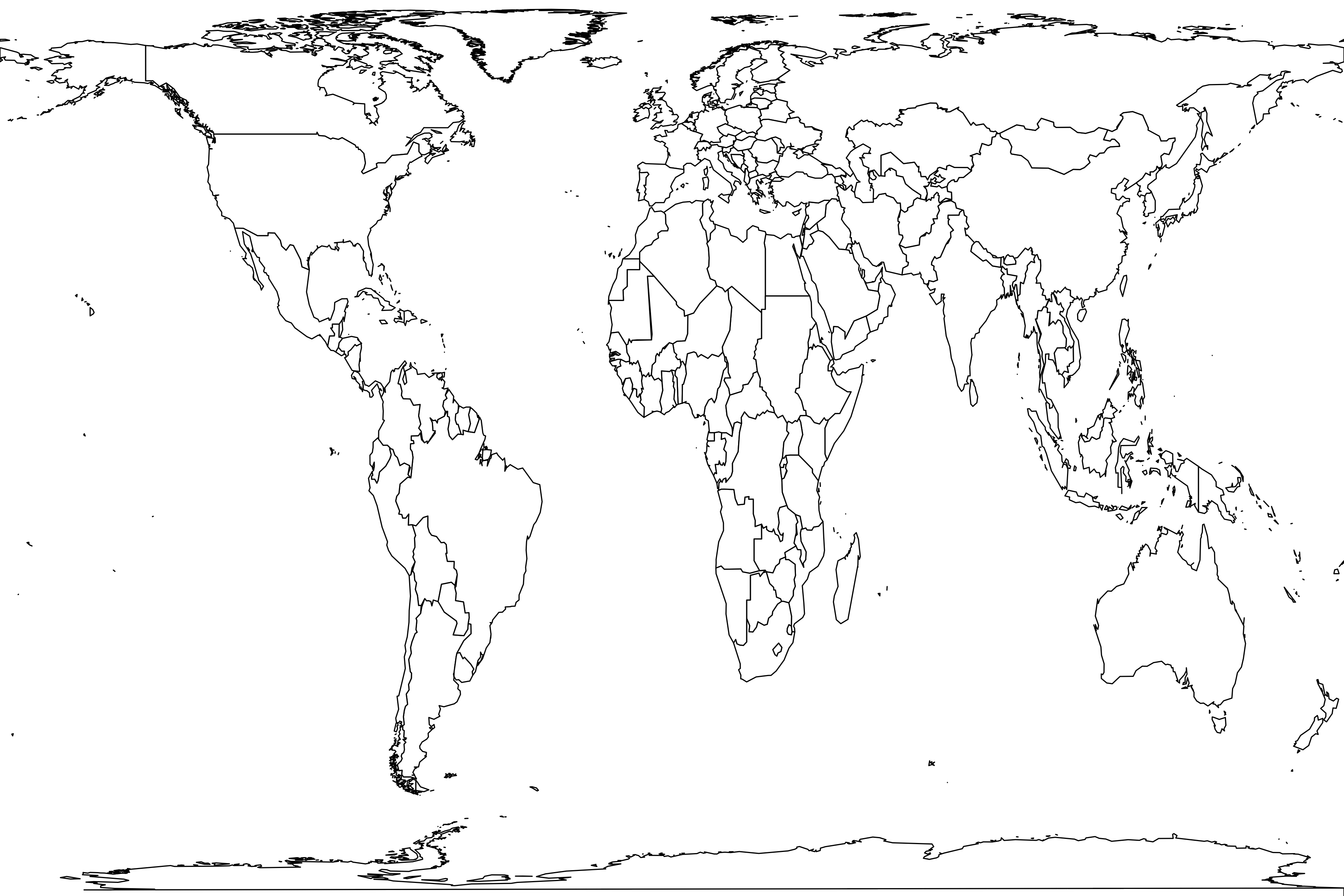
Geography comments: "Boegoeberg 1 (BOG1) is located on the Atlantic coast of the Northern Cape Province of South Africa, approximately 850 km north of Cape Town".
Three ostrich eggshell samples were radiocarbon dated, with the uppermost unit dating to 37, 220 BP.
"This date should be considered minimum since the actual ages could be much greater if the samples were only minutely contaminated by more recent carbon" (although deposition most likely occurred between 71, 000 and 37, 000 years ago).
Three ostrich eggshell samples were radiocarbon dated, with the uppermost unit dating to 37, 220 BP.
"This date should be considered minimum since the actual ages could be much greater if the samples were only minutely contaminated by more recent carbon" (although deposition most likely occurred between 71, 000 and 37, 000 years ago).
Environment
Lithology: sandstone
Taphonomic context: carnivore accumulation, rock shelter
Habitat comments: "The BOG1 site was discovered when diamond miners bulldozed sand from a gully in schist bedrock and exposed a shallow, fossiliferous shelter in the gully wall".
"The sedimentary fill at BOG1 comprises two major units, beach sands to a height of roughly 7 m above mean sea level overlain by a mix of alluvial and aeolian sands".
"Bones are absent in the beach sands but abound in overlying deposits. Fragments of the schist bedrock occur throughout".
"Excavations exposed five conformable fossiliferous units, differentiated primarily by the quantity and size of the schist fragments and by their state of decomposition". As the five units are "faunistically identical", they were treated as one single unit.
"The absence of artifacts and cut-marked bones and the presence of coprolites and chewed or digested bones indicates that hyenas accumulated the bones at BOG1".
"The sedimentary fill at BOG1 comprises two major units, beach sands to a height of roughly 7 m above mean sea level overlain by a mix of alluvial and aeolian sands".
"Bones are absent in the beach sands but abound in overlying deposits. Fragments of the schist bedrock occur throughout".
"Excavations exposed five conformable fossiliferous units, differentiated primarily by the quantity and size of the schist fragments and by their state of decomposition". As the five units are "faunistically identical", they were treated as one single unit.
"The absence of artifacts and cut-marked bones and the presence of coprolites and chewed or digested bones indicates that hyenas accumulated the bones at BOG1".
Methods
Life forms: carnivores, rodents, ungulates, marine mammals, other small mammals
Sampling methods: quarry
Sample size: 5452 specimens
Years: 1994, 1996
Net or trap nights: 0
Basal area status: not applicable
Sampling comments: "In November 1994 and April 1996, the surviving deposit was excavated" (much of it had been previously damaged or removed from the bulldozing).
"The site was overlain with a grid of meter squares, and each square was subdivided into 16 sectors, 25 cm on a side".
"All objects were recorded with respect to sector and natural stratigraphic unit".
"The site was overlain with a grid of meter squares, and each square was subdivided into 16 sectors, 25 cm on a side".
"All objects were recorded with respect to sector and natural stratigraphic unit".
Metadata
Sample no: 3913
Contributor no: Benjamin Carter
Enterer: Benjamin Carter
Created: 2022-03-04 15:32:51
Modified: 2022-03-08 00:28:35
Abundance distribution
Each square represents a species. Square sizes are proportional to counts. Values are logged.
Statistics
21 species
5 singletons
total count 5452
geometric series index: 32.9
Fisher's α: 2.768
geometric series k: 0.6556
Hurlbert's PIE: 0.2617
Shannon's H: 0.572
Good's u: 0.9991
Register
| Leporidae indet. | 7 | |
| Bathyergus janetta | 6 | |
| Canis mesomelas (black-backed jackal) | 630 | 7.9 kg |
| Vulpes chama (Cape fox) | 12 | 2.7 kg |
| Otocyon megalotis (bat-eared fox) | 4 | 3.2 kg |
| also 20 Vulpini indet. | ||
| Lycaon pictus (African wild dog) | 2 | 26.0 kg |
| Ictonyx striatus (striped polecat) | 1 | 753.0 g |
| Mellivora capensis (honey badger) | 7 | 7.7 kg |
| Herpestes pulverulentus (Cape grey mongoose) | 4 | |
| Suricata suricatta | 1 | 663.0 g |
| also 15 Herpestidae indet. | ||
| Parahyaena brunnea (brown hyena) | 64 | |
| "Hyaena brunnea" | ||
| Felis lybica (African wildcat) | 1 | 4.5 kg |
| Panthera leo (lion) | 1 | 147.0 kg |
| Diceros bicornis (black rhinoceros) | 1 | |
| also 18 Rhinocerotidae indet. | ||
| Oryx gazella (gemsbok) | 17 | 195.0 kg |
| Redunca arundinum (southern reedbuck) | 4 | |
| Connochaetes taurinus (blue wildebeest) | 4 | 202.0 kg |
| Antidorcas marsupialis (springbok) | 34 | 40.0 kg |
| Raphicerus campestris (steenbok) | 8 | 9.7 kg |
| also 216 Bovidae indet. | ||
| Delphinidae indet. | 3 | |
| also 6 Cetacea indet. | ||
| Arctocephalus pusillus | 4641 | |