
Tham Lod rockshelter (Unit 2)
Basic information
Sample name: Tham Lod rockshelter (Unit 2)
Reference: R. Shoocongdej and A. Wattanapituksakul. 2020. Faunal assemblages and demography during the Late Pleistocene (MIS 2-1) to Early Holocene in Highland Pang Mapha, Northwest Thailand. Quaternary International 563:51-63 [ER 3710]
Geography
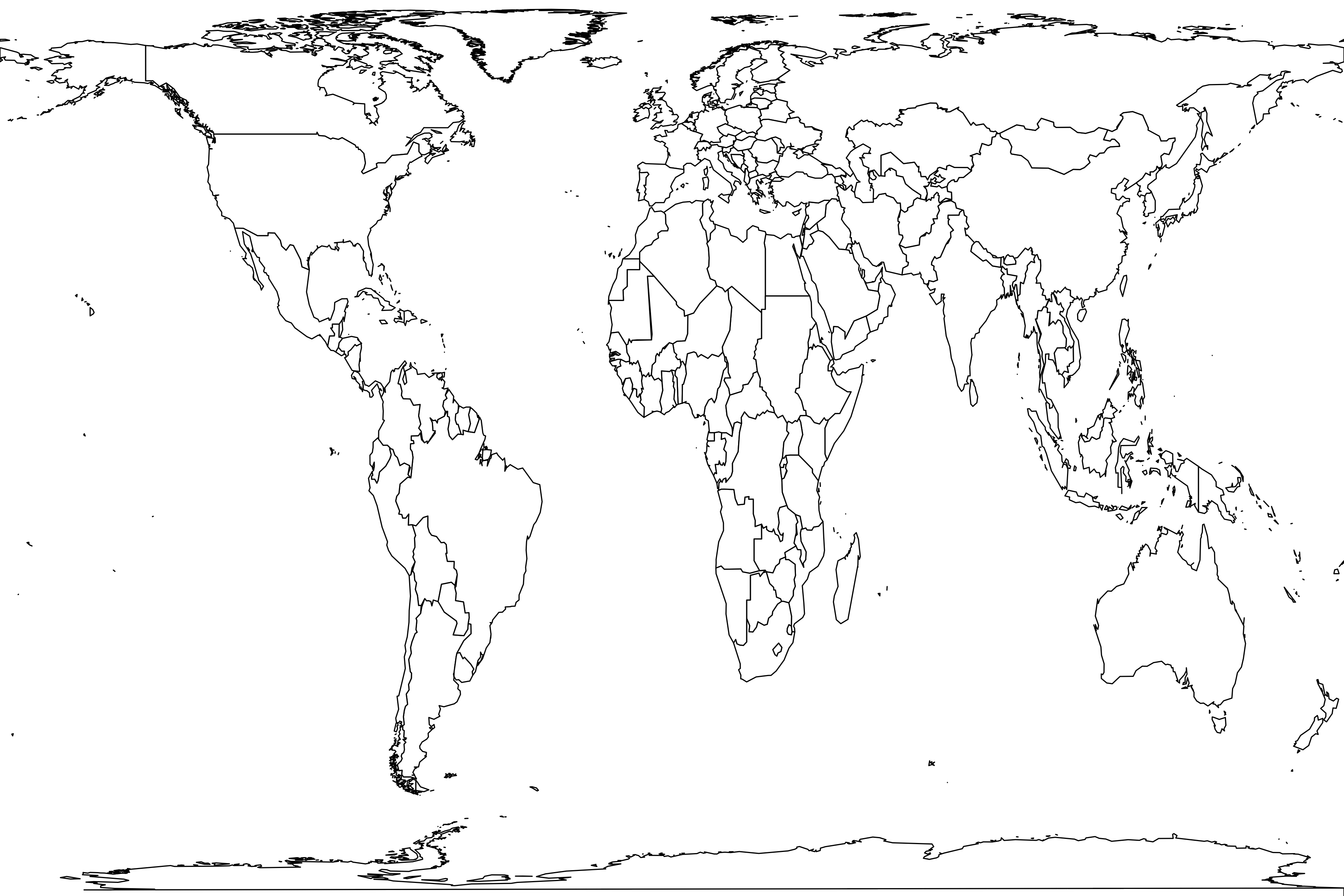
Country: Thailand
State: Mae Hong Son
Coordinate: 20° 34' 19" N, 98° 17' 38" E
Latlng basis: stated in text
Time interval: Late Pleistocene
Section: 3710
Unit number: 2
Unit order: below to above
Max Ma: 0.022257
Min Ma: 0.01364
Age basis: radiocarbon (uncalibrated)
Geography comments: "Tham Lod rockshelter is located in the Tham Lod Nature and Wildlife Educational Center in northern Thailand, approximately 640 m above sea level, and 250 m from the Lang River".
Based on several radiocarbon ages, "the middle part of the sequence (Unit 2) is dated to between 13, 640 and 22, 257 years BP".
Based on several radiocarbon ages, "the middle part of the sequence (Unit 2) is dated to between 13, 640 and 22, 257 years BP".
Environment
Lithology: not described
Taphonomic context: human accumulation, rock shelter
Archaeology: stone tools
Habitat comments: "The rockshelter forms part of a huge semi-circular karstic limestone doline, facing to the north. The karstic features are developed in Middle Carboniferous limestones".
"Based on the stratigraphic profile and chronological data, the sequence is divided into three main geoarchaeological units or "Cultural Layers" that can be correlated to the successive settlement phases". The second cultural layer (Unit 2), the middle part of the sequence, "can be related to the second settlement phase, during which the site could have experienced a break in its occupation".
"The Tham Lod lithic assemblage involved a total of 102, 386 items recovered from all three cultural layers. These can be subdivided into cores, flake tools, and pebbles, with the majority being produced from locally available grey sandstone cobbles and pebbles collected from the nearby Lang River". The site "appears to have been used as a lithic workshop (tool manufacturing and maintenance), as supported by the high densities of lithic artifacts and refuse".
"Based on the stratigraphic profile and chronological data, the sequence is divided into three main geoarchaeological units or "Cultural Layers" that can be correlated to the successive settlement phases". The second cultural layer (Unit 2), the middle part of the sequence, "can be related to the second settlement phase, during which the site could have experienced a break in its occupation".
"The Tham Lod lithic assemblage involved a total of 102, 386 items recovered from all three cultural layers. These can be subdivided into cores, flake tools, and pebbles, with the majority being produced from locally available grey sandstone cobbles and pebbles collected from the nearby Lang River". The site "appears to have been used as a lithic workshop (tool manufacturing and maintenance), as supported by the high densities of lithic artifacts and refuse".
Methods
Life forms: carnivores, primates, rodents, ungulates, lizards, snakes, turtles, fishes
Sampling methods: quarry, screenwash
Sample size: 639 specimens
Years: 2002
Net or trap nights: 0
Basal area status: not applicable
Sampling comments: "In 2002, the Highland Archaeology Project excavated three areas at the base of the rockshelter, covering a transect from the cliff slope to the lower plain: Area 1 (a 6 m2 trench), Area 2 (a 12 m2 trench), and Area 3 (an 18 m2 trench)".
The register below corresponds to the remains found throughout Cultural Layer 2.1 (Unit 2) across all three excavation areas.
The register below corresponds to the remains found throughout Cultural Layer 2.1 (Unit 2) across all three excavation areas.
Metadata
Sample no: 3929
Contributor no: Benjamin Carter
Enterer: Benjamin Carter
Created: 2022-03-26 12:04:41
Modified: 2023-05-30 00:31:21
Abundance distribution
Each square represents a species. Square sizes are proportional to counts. Values are logged.
Statistics
20 species
3 singletons
total count 639
geometric series index: 27.8
Fisher's α: 3.922
geometric series k: 0.7536
Hurlbert's PIE: 0.7784
Shannon's H: 1.9024
Good's u: 0.9953
Register
| Macaca sp. | 4 | |
| also 3 Cercopithecidae indet. | ||
| Ursus thibetanus (Asian black bear) | 1 | |
| also 2 "Ursus spp." | ||
| Panthera tigris (tiger) | 1 | |
| also 6 Carnivora indet. | ||
| Sus scrofa (pig) | 20 | |
| Muntiacus sp. | 6 | |
| Cervus eldii (Eld's deer) | 23 | |
| "Panolia eldii" | ||
| Cervus unicolor (sambar deer) | 182 | |
| "Rusa unicolor"; also 87 Cervus sp. "Panolia/Rusa sp." | ||
| Axis sp. | 86 | |
| also 133 Cervidae indet. | ||
| Bubalus arnee (wild water buffalo) | 3 | |
| Bos gaurus (gaur) | 23 | 481.0 kg |
| Bos javanicus (banteng) | 4 | 488.0 kg |
| Capricornis sumatraensis (mainland serow) | 4 | |
| Naemorhedus griseus (Chinese goral) | 38 | |
| Naemorhedus goral (Himalayan goral) | 7 | 25.0 kg |
| Cannomys badius | 2 | |
| also 5 Rhizomyinae indet. | ||
| Hystricidae indet. | 6 | |
| Lacertilia indet. | 1 | |
| Testudines indet. | 216 | |
| Serpentes indet. | 4 | |
| also 1 Reptilia indet. | ||
| Cyprinidae indet. | 8 | |