
Plovers Lake
Basic information
Sample name: Plovers Lake
Reference: D. J. de Ruiter, J. K. Brophy, P. J. Lewis, S. E. Churchill, and L. R. Berger. 2008. Faunal assemblage composition and paleoenvironment of Plovers Lake, a Middle Stone Age locality in Gauteng Province, South Africa. Journal of Human Evolution 55(6):1102-1117 [ER 3718]
Geography
Country: South Africa
State: Gauteng
Coordinate: 26° 59' 38" S, 28° 47' 37" E
Latlng basis: stated in text
Time interval: Late Pleistocene
Max Ma: 0.0812
Min Ma: 0.07
Age basis: ESR
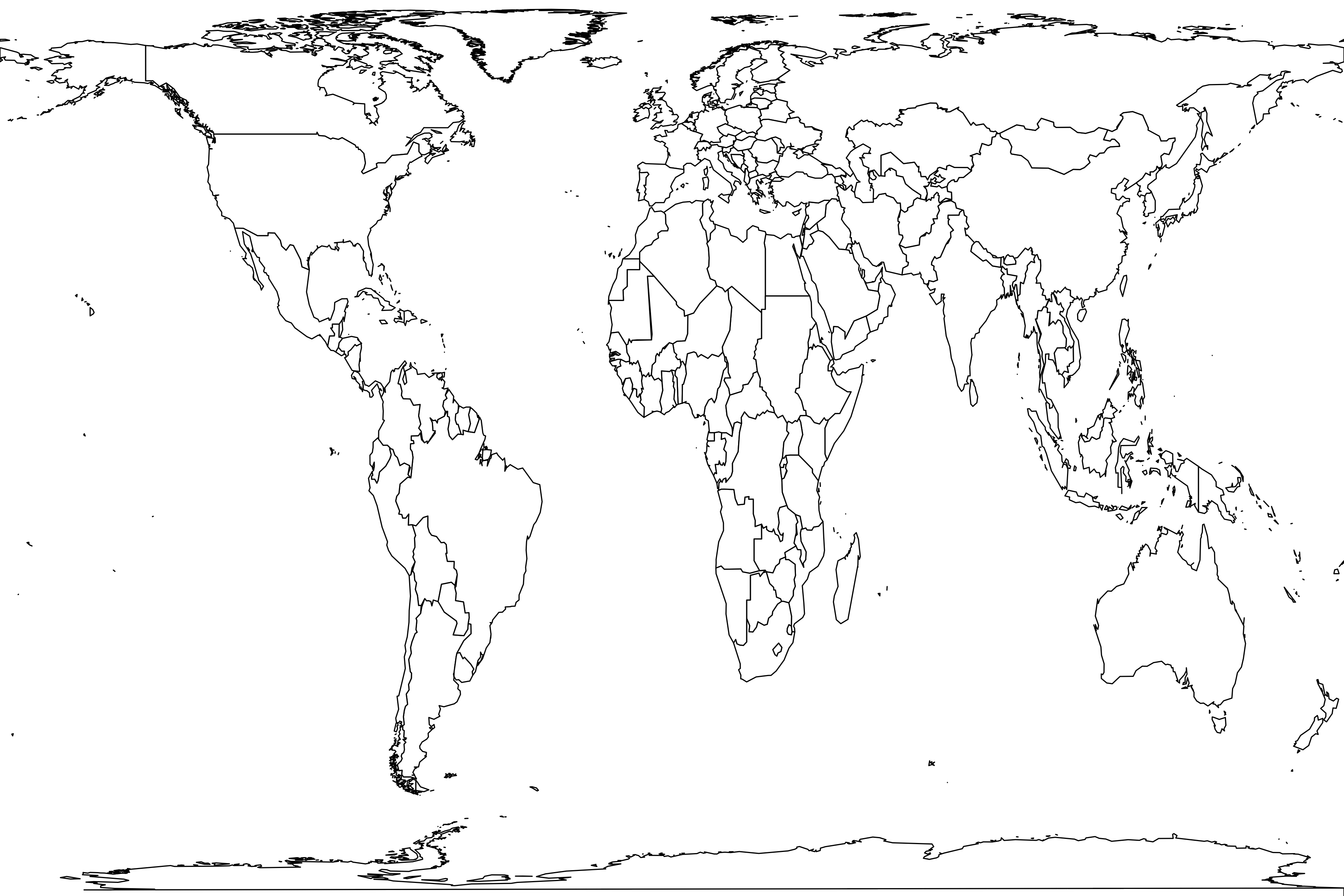
Geography comments: "Plovers Lake is located in the Bloubank Valley of the Krugersdorp District of Gauteng Province, South Africa, approximately 45 km northwest of Johannesburg".
U-series dating on two flowstone layers bracketing the main depositional unit constrain the age of the assemblage to between 88.7 ± 1.6 ka and 62.9 ± 1.3 ka. "A single isochron ESR date of 75.6 ± 5.6 ka was produced from a bovid tooth extracted from approximately 20 cm below the upper flowstone layer", with an error range of 70.0–81.2 ka.
U-series dating on two flowstone layers bracketing the main depositional unit constrain the age of the assemblage to between 88.7 ± 1.6 ka and 62.9 ± 1.3 ka. "A single isochron ESR date of 75.6 ± 5.6 ka was produced from a bovid tooth extracted from approximately 20 cm below the upper flowstone layer", with an error range of 70.0–81.2 ka.
Environment
Lithology: limestone
Taphonomic context: carnivore accumulation, cave
Archaeology: stone tools
Habitat comments: "Plovers Lake is a dolomitic cave infill with two principal fossiliferous deposits": an internal deposit and a much older (c. 1 Ma) external deposit. "The internal deposit is comprised mainly of loosely calcified sediments with abundant faunal and archaeological materials. There are two discrete faunal assemblages of this deposit, a relatively undisturbed in situ component (FBU1), and a more heavily disturbed ex situ component above (PDU)".
"It is hypothesised that the PDU materials actually represent a disturbed component of the in situ FBU1 deposit that was displaced by miners. The two assemblages evince similar taxonomic representation, and the similarity in skeletal part representation supports a common origin for the two assemblages from the FBU1 sediments". As such, "the two assemblages represent a single faunal entity".
"Stone tools are present throughout, alongside human skeletal remains in FBU1". The tools consist of a total of 2072 lithic pieces, of which 1449 are undiagnostic chunks and debitage and 623 are identifiable cores, flakes, blades, and flake-blades".
Despite the presence of stone tools, human skeletal material, and some cut-marked bone, such "indications are too rare to consider Plovers Lake a human occupation site. Instead, a high abundance of carnivores, coprolites, and carnivore damaged bones point to brown hyenas as the principal, though not exclusive, bone accumulating agent".
"It is hypothesised that the PDU materials actually represent a disturbed component of the in situ FBU1 deposit that was displaced by miners. The two assemblages evince similar taxonomic representation, and the similarity in skeletal part representation supports a common origin for the two assemblages from the FBU1 sediments". As such, "the two assemblages represent a single faunal entity".
"Stone tools are present throughout, alongside human skeletal remains in FBU1". The tools consist of a total of 2072 lithic pieces, of which 1449 are undiagnostic chunks and debitage and 623 are identifiable cores, flakes, blades, and flake-blades".
Despite the presence of stone tools, human skeletal material, and some cut-marked bone, such "indications are too rare to consider Plovers Lake a human occupation site. Instead, a high abundance of carnivores, coprolites, and carnivore damaged bones point to brown hyenas as the principal, though not exclusive, bone accumulating agent".
Methods
Life forms: carnivores, primates, rodents, ungulates, other large mammals, other small mammals, birds, lizards, snakes, turtles, fishes
Sampling methods: quarry, screenwash
Sample size: 1739 specimens
Years: 2002 - 2004
Net or trap nights: 0
Basal area status: not applicable
Sampling comments: "Excavations of the Plovers Lake internal deposit were conducted from 2002–2004".
The PDU materials were excavated from two areas: above the upper flowstone inside the cave, and scattered in the vicinity of the entrance to the cave. After clearing the PDU sediments, portions of the capping Flowstone I were removed to allow access to the in situ FBU1 materials. Excavation proceeded using a point-provenience system whereby each skeletal element and artifact was individually plotted using an infrared theodolite. Sediments were sieved through a series of descending-size screens down to 0.4 mm, allowing for total recovery of all materials, including microfauna".
The PDU materials were excavated from two areas: above the upper flowstone inside the cave, and scattered in the vicinity of the entrance to the cave. After clearing the PDU sediments, portions of the capping Flowstone I were removed to allow access to the in situ FBU1 materials. Excavation proceeded using a point-provenience system whereby each skeletal element and artifact was individually plotted using an infrared theodolite. Sediments were sieved through a series of descending-size screens down to 0.4 mm, allowing for total recovery of all materials, including microfauna".
Metadata
Sample no: 3942
Contributor no: Benjamin Carter
Enterer: Benjamin Carter
Created: 2022-04-01 13:42:20
Modified: 2022-04-05 07:12:36
Abundance distribution
Each square represents a species. Square sizes are proportional to counts. Values are logged.
Statistics
54 species
14 singletons
total count 1739
geometric series index: 90.6
Fisher's α: 10.569
geometric series k: 0.8869
Hurlbert's PIE: 0.8404
Shannon's H: 2.4147
Good's u: 0.992
Register
| Homo sapiens (human) | 7 | 64.0 kg |
| Papio ursinus (chacma baboon) | 1 | 20.0 kg |
| Chlorocebus aethiops (grivet) | 1 | |
| Felis lybica (African wildcat) | 8 | 4.5 kg |
| Panthera leo (lion) | 1 | 147.0 kg |
| Panthera pardus (leopard) | 6 | |
| also 14 Felidae indet. | ||
| Parahyaena brunnea (brown hyena) | 17 | |
| Crocuta crocuta (spotted hyena) | 3 | 66.0 kg |
| also 4 Hyaenidae indet. | ||
| Lycaon pictus (African wild dog) | 5 | 26.0 kg |
| Canis mesomelas (black-backed jackal) | 156 | 7.9 kg |
| Vulpes chama (Cape fox) | 31 | 2.7 kg |
| Otocyon megalotis (bat-eared fox) | 3 | 3.2 kg |
| also 72 Canidae indet. | ||
| Atilax paludinosus | 4 | 2.8 kg |
| Suricata suricatta | 2 | 663.0 g |
| Genetta tigrina | 7 | 1.7 kg |
| also 34 Viverridae indet. | ||
| Herpestes sanguineus | 2 | |
| "Galarella sanguinea" | ||
| Cynictis penicillata | 2 | 910.0 g |
| Mungos mungo | 1 | 1.5 kg |
| Ictonyx striatus (striped polecat) | 3 | 753.0 g |
| Mellivora capensis (honey badger) | 1 | 7.7 kg |
| Aonyx capensis (African clawless otter) | 2 | 14.0 kg |
| also 1 Mustelidae indet. | ||
| Procavia capensis | 580 | 2.8 kg |
| Equus quagga burchellii (plains zebra) | 64 | |
| "Equus burchelli" | ||
| Phacochoerus africanus (common warthog) | 3 | 82.0 kg |
| also 2 Suidae indet. | ||
| Hippopotamus sp. | 1 | |
| Megalotragus sp. | 2 | |
| Connochaetes taurinus (blue wildebeest) | 9 | 202.0 kg |
| also 118 Alcelaphinae indet. | ||
| †Damaliscus niro (bovid) | 1 | |
| Damaliscus pygargus phillipsi (bontebok) | 159 | |
| "Damaliscus dorcas" | ||
| Antidorcas marsupialis (springbok) | 85 | 40.0 kg |
| †Antidorcas bondi (bovid) | 71 | |
| Raphicerus campestris (steenbok) | 9 | 9.7 kg |
| Hippotragus sp. | 4 | |
| Redunca fulvorufula (mountain reedbuck) | 10 | 29.0 kg |
| Taurotragus oryx (common eland) | 2 | |
| Tragelaphus strepsiceros (greater kudu) | 6 | 189.0 kg |
| Syncerus caffer (African buffalo) | 4 | 548.0 kg |
| Pelea capreolus (grey rhebok) | 6 | 16.0 kg |
| also 1457 Bovidae indet. | ||
| Hystrix africaeaustralis | 28 | 15.0 kg |
| Lepus sp. | 155 | |
| Aethomys chrysophilus | 8 | |
| Dendromus melanotis | 1 | |
| Mystromys albicaudatus | 3 | |
| Otomys irroratus | 10 | |
| Mastomys natalensis | 1 | |
| "Praomys natalensis" | ||
| Steatomys pratensis | 1 | |
| Gerbilliscus sp. | 1 | |
| "Tatera sp." | ||
| Cryptomys hottentotus | 1 | |
| Crocidura sp. | 10 | |
| Varanus cf. niloticus | 4 | |
| also 3 "lizard" indet. | ||
| Serpentes indet. | 1 | |
| Testudines indet. | 5 | |
| Aves indet. | 230 | |
| Osteichthyes indet. | 1 | |