
Blombos Cave (Phase M2)
Basic information
Sample name: Blombos Cave (Phase M2)
Reference: C. S. Henshilwood, J. C. Sealy, R. Yates, K. Cruz-Uribe, P. Goldberg, F. E. Grine, R. G. Klein, C. Poggenpoel, K. van Niekerk, and I. Watts. 2001. Blombos Cave, Southern Cape, South Africa: Preliminary report on the 1992-1999 excavations of the Middle Stone Age levels. Journal of Archaeological Science 28(4):421-448 [ER 3719]
Geography
Country: South Africa
State: Western Cape
Coordinate: 34° 25' S, 21° 13' E
Latlng basis: stated in text
Time interval: Late Pleistocene
Section: 3719
Unit number: 3
Unit order: above to below
Max Ma: 0.0846
Min Ma: 0.0768
Age basis: OSL
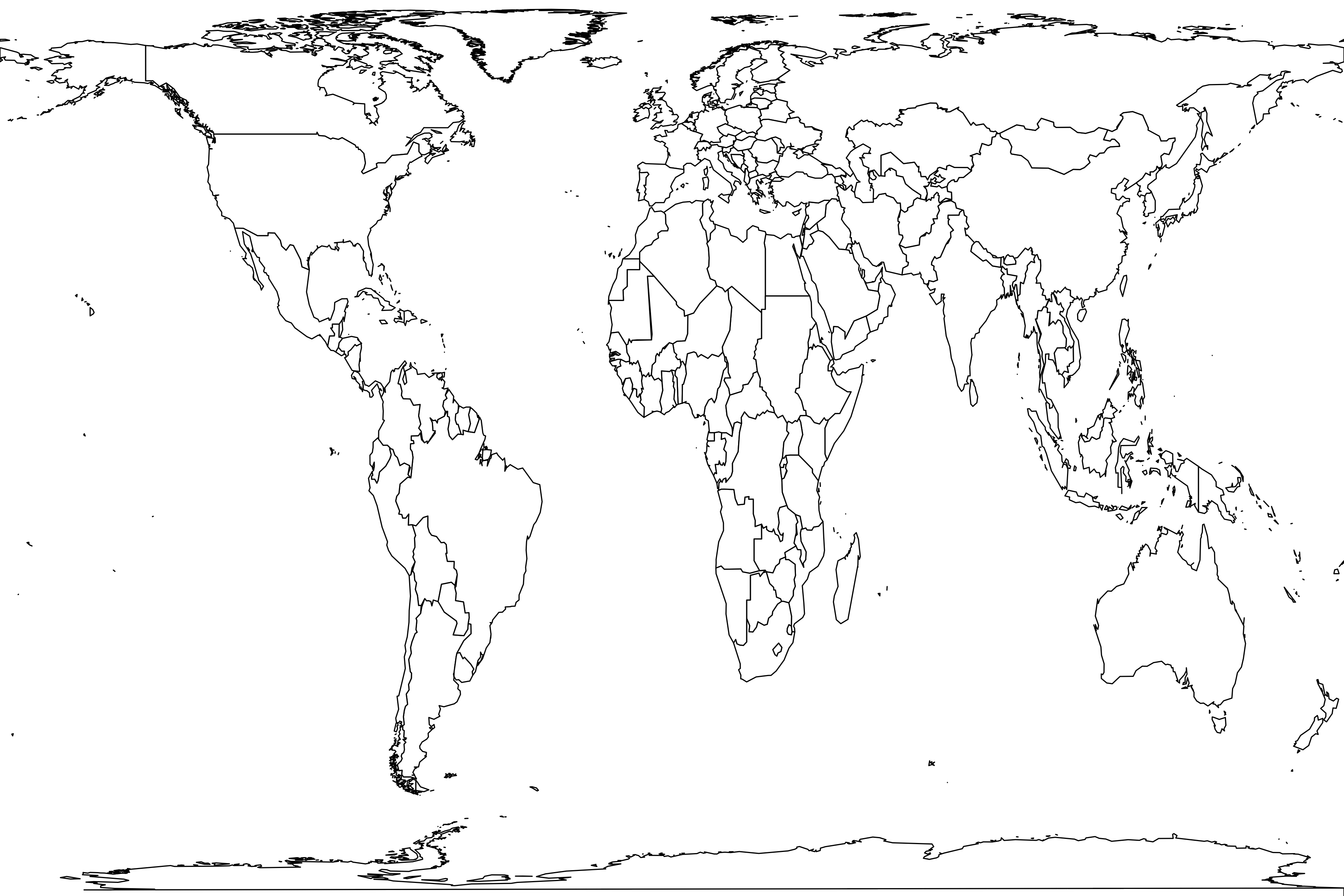
Geography comments: "Blombos Cave is a limestone cave situated in the Blombosfontein Nature Reserve on the south coast of the Western Cape Province of South Africa, some 100 m from the Indian Ocean and approximately 300 km east of Cape Town".
"The M2 phase has been dated by OSL to between 84.6 ± 5.8 ka and 76.8 ± 3.1 ka".
"The M2 phase has been dated by OSL to between 84.6 ± 5.8 ka and 76.8 ± 3.1 ka".
Environment
Lithology: sandstone
Taphonomic context: cave, human accumulation
Archaeology: bone tools, hearths, stone tools
Habitat comments: "The cave was formed as a result of solution action and wave cutting of a cliff formed of calcified sediments that lies above a basal layer of Table Mountain Sandstone".
The site consists of three major Middle Stone Age layers (Phases M1-M3) beneath a thick, sterile aeolian sand dune layer that separates the Middle Stone Age (MSA) sequence from the recent Late Stone Age (LSA) layers.
"Most of the MSA deposits are finely bedded to laminated, with cm thick bedding. Phase M2 is a medium brown sand with a low density of shell, stone and bone. Large hearths lie within the dense shelly layer near the shelter entrance".
Various stone stools are present including flakes, cores, retouched pieces, and bifacial points. The upper part of this phase contains most of the bone tools, probably used as awls and projectile points".
"The abundance of artefacts strongly implicates humans as the principle bone accumulators".
The site consists of three major Middle Stone Age layers (Phases M1-M3) beneath a thick, sterile aeolian sand dune layer that separates the Middle Stone Age (MSA) sequence from the recent Late Stone Age (LSA) layers.
"Most of the MSA deposits are finely bedded to laminated, with cm thick bedding. Phase M2 is a medium brown sand with a low density of shell, stone and bone. Large hearths lie within the dense shelly layer near the shelter entrance".
Various stone stools are present including flakes, cores, retouched pieces, and bifacial points. The upper part of this phase contains most of the bone tools, probably used as awls and projectile points".
"The abundance of artefacts strongly implicates humans as the principle bone accumulators".
Methods
Life forms: carnivores, rodents, ungulates, marine mammals, other large mammals, other small mammals, fishes
Excluded forms: bats, rodents, other small mammals, birds, other reptiles, clams
Sampling methods: quarry, screenwash
Sample size: 643 specimens
Years: 1992 -
Net or trap nights: 0
Basal area status: not applicable
Sampling comments: "The first excavation at Blombos Cave was initiated in 1991 and led to the recovery of only the LSA deposits dated at less than 2 ka old. A second excavation was begun in 1992, with excavations of both the LSA and MSA levels continuing in 1997, 1998, 1999, 2000" and beyond...
"Within the cave interior, behind the drip line, a surface area of 12·5 m2 of MSA deposits has been excavated (as of 2000); forward of the drip line a test trench of 3 m2 was excavated in 1999. Excavation by brush or trowel followed individual strata or layers".
"Recovered deposits were wet sieved through both 1·5 and 3·0 mm meshes using seawater. Recovered material was later re-washed in freshwater and shade dried".
The register below consists of the identified macromammal remains only (those with a mean adult body weight of at least 0.75 kg). Smaller micromammals are also present (along with several other groups), although raw NISP counts are not provided, not even in the follow-up small mammal dedicated publications.
"Within the cave interior, behind the drip line, a surface area of 12·5 m2 of MSA deposits has been excavated (as of 2000); forward of the drip line a test trench of 3 m2 was excavated in 1999. Excavation by brush or trowel followed individual strata or layers".
"Recovered deposits were wet sieved through both 1·5 and 3·0 mm meshes using seawater. Recovered material was later re-washed in freshwater and shade dried".
The register below consists of the identified macromammal remains only (those with a mean adult body weight of at least 0.75 kg). Smaller micromammals are also present (along with several other groups), although raw NISP counts are not provided, not even in the follow-up small mammal dedicated publications.
Metadata
Sample no: 3944
Contributor no: Benjamin Carter
Enterer: Benjamin Carter
Created: 2022-04-02 14:27:33
Modified: 2023-05-30 00:53:25
Abundance distribution
Each square represents a species. Square sizes are proportional to counts. Values are logged.
Statistics
26 species
8 singletons
total count 643
geometric series index: 47.6
Fisher's α: 5.438
geometric series k: 0.7957
Hurlbert's PIE: 0.6838
Shannon's H: 1.648
Good's u: 0.9876
Register
| Atelerix frontalis | 10 | |
| "Erinaceus frontalis" | ||
| Lepus capensis | 4 | |
| Lepus saxatilis | 15 | 2.0 kg |
| Bathyergus suillus | 303 | |
| Ictonyx striatus (striped polecat) | 2 | 753.0 g |
| Mellivora capensis (honey badger) | 1 | 7.7 kg |
| Genetta sp. | 4 | |
| Herpestes pulverulentus (Cape grey mongoose) | 4 | |
| Felis lybica (African wildcat) | 1 | 4.5 kg |
| Arctocephalus pusillus | 32 | |
| Procavia capensis (rock hyrax) | 190 | 2.8 kg |
| Rhinocerotidae indet. | 6 | |
| Hippopotamus amphibius (hippopotamus) | 1 | 1107.0 kg |
| Taurotragus oryx (common eland) | 8 | |
| †Hippotragus leucophaeus (bluebuck) | 6 | |
| Redunca arundinum (southern reedbuck) | 4 | |
| Antidorcas sp. | 1 | |
| Sylvicapra grimmia (common duiker) | 2 | 13.0 kg |
| Raphicerus campestris (steenbok) | 1 | 9.7 kg |
| Raphicerus melanotis (Cape grysbok) | 2 | 9.1 kg |
| also 48 Raphicerus sp. | ||
| Pelea capreolus (grey rhebok) | 2 | 16.0 kg |
| also 519 Bovidae indet. | ||
| Delphinidae indet. | 1 | |
| Dichistius capensis | 1 | |
| "Coracinus capensis" | ||
| Cymatoceps nasutus | 31 | |
| Chrysoblephus gibbiceps | 1 | |
| Galeichthys feliceps | 10 | |
| also 142 Fish indet. | ||