
Karungu
Basic information
Sample name: Karungu
Reference: J. T. Faith, C. A. Tryon, D. J. Peppe, E. J. Beverly, N. Blegen, S. Blumenthal, K. L. Chritz, S. G. Driese, and D. Patterson. 2015. Paleoenvironmental context of the Middle Stone Age record from Karungu, Lake Victoria Basin, Kenya, and its implications for human and faunal dispersals in East Africa. Journal of Human Evolution 83:28-45 [ER 3726]
Geography
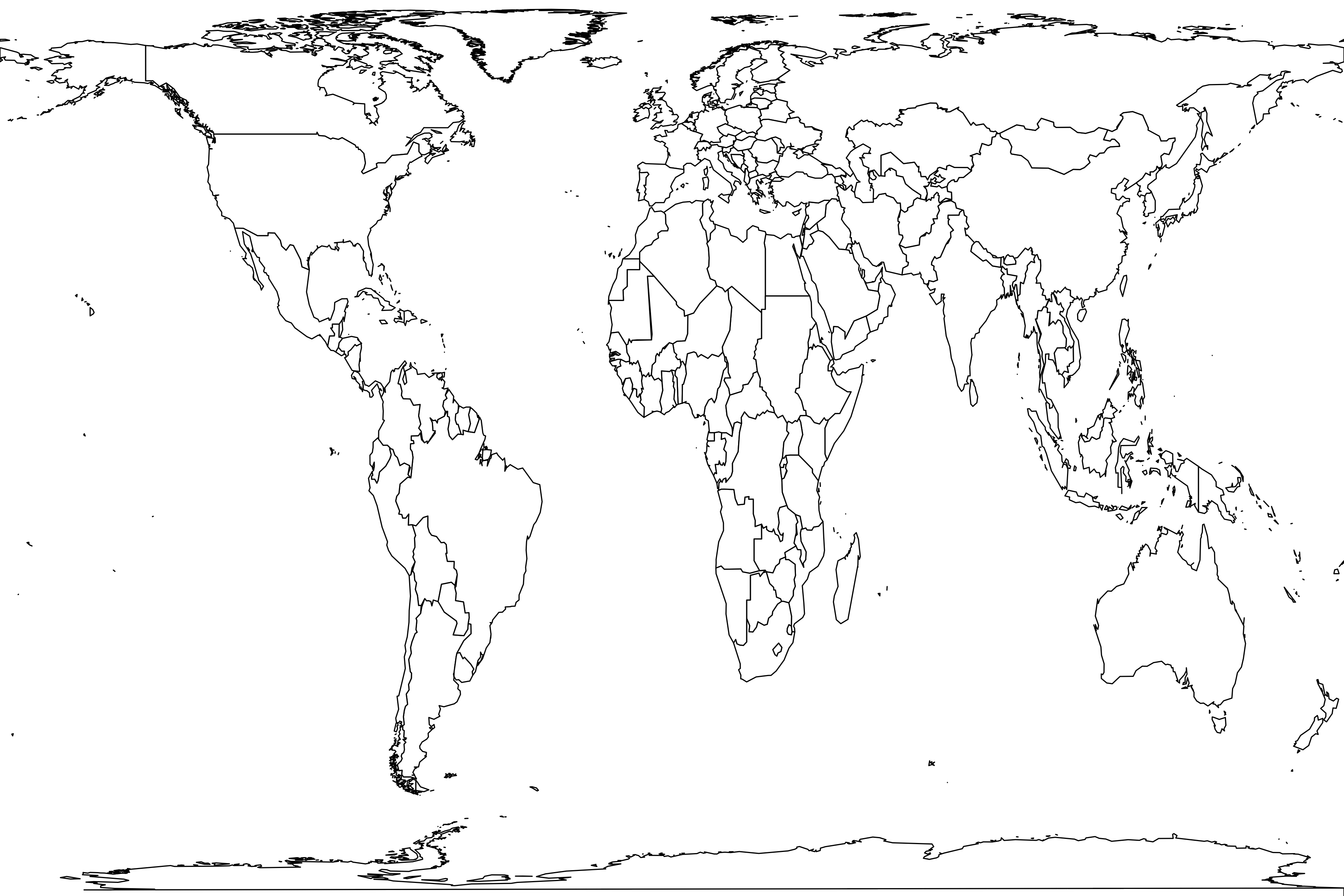
Country: Kenya
Coordinate: 1° 51' 38" S, 34° 9' 25" E
Latlng basis: stated in text
Time interval: Late Pleistocene
Max Ma: 0.094
Min Ma: 0.045
Age basis: other
Geography comments: "Karungu is located along the shores of Lake Victoria in southwest Kenya".
"Direct age estimates for the Pleistocene deposits at Karungu are provided by AMS radiocarbon dates on surface-collected ostrich eggshell fragments from Kisaaka and Aringo. The age estimates for Kisaaka are 46, 413 ± 2595 BP and 46, 100 ± 2595 BP; the sample from Aringo yielded an age of >49, 900 BP".
"These are best considered minimum ages; current evidence suggests that the Pleistocene sequence at Karungu dates from ∼45 to 94 ka" (the latter date based on U-series age estimates on a tufa deposit at the base of the Pleistocene section at Nyamita on Rusinga Island).
"Direct age estimates for the Pleistocene deposits at Karungu are provided by AMS radiocarbon dates on surface-collected ostrich eggshell fragments from Kisaaka and Aringo. The age estimates for Kisaaka are 46, 413 ± 2595 BP and 46, 100 ± 2595 BP; the sample from Aringo yielded an age of >49, 900 BP".
"These are best considered minimum ages; current evidence suggests that the Pleistocene sequence at Karungu dates from ∼45 to 94 ka" (the latter date based on U-series age estimates on a tufa deposit at the base of the Pleistocene section at Nyamita on Rusinga Island).
Environment
Lithology: conglomerate
Taphonomic context: fluvial deposit, paleosol
Archaeology: stone tools
Habitat comments: "The Pleistocene deposits of Karungu are discontinuously exposed over an area of ∼40 km2 and are most commonly preserved at elevations 15–65 m above modern Lake Victoria".
"The Pleistocene sedimentary sequence comprises fluvial deposits, paleosols, and variably reworked tephra. At the base of the sequence is a conglomerate of varying thickness that is overlain by three paleosols intercalated with tephra deposits".
"Artifacts were collected from all localities spanning the Pleistocene sequence at Karungu. Artifacts are typologically MSA and include points, blades, and Levallois flakes and cores, as well as obsidian flakes".
"The Pleistocene sedimentary sequence comprises fluvial deposits, paleosols, and variably reworked tephra. At the base of the sequence is a conglomerate of varying thickness that is overlain by three paleosols intercalated with tephra deposits".
"Artifacts were collected from all localities spanning the Pleistocene sequence at Karungu. Artifacts are typologically MSA and include points, blades, and Levallois flakes and cores, as well as obsidian flakes".
Methods
Life forms: carnivores, rodents, ungulates
Sampling methods: quarry, screenwash, surface
Sample size: 465 specimens
Years: 2011 - 2013
Net or trap nights: 0
Basal area status: not applicable
Sampling comments: "Pedestrian surveys were conducted at all Pleistocene exposures at Karungu from 2011 to 2013".
"A test excavation was conducted at one of the exposure sites (Aringo) in 2013, where a small geological trench uncovered numerous artifacts. A controlled test excavation of 5 m2 was set up adjacent to the trench, and excavated according to arbitrary 10-cm levels within discernible stratigraphic units. All sediment was sieved through 1/8-inch mesh".
"The collection of fauna emphasized the recovery of taxonomically informative specimens, including all cranial and dental remains, bovid horn cores, ruminant astragali and metapodials, and all specimens belonging to primates or carnivores".
"Microfaunal remains were recovered in abundance from the general surface collection at Kisaaka, with smaller collections recovered from other exposures. Microfaunal recovery was enhanced at Kisaaka by screening surface sediments from an approximately 10 m2 area through 1-mm mesh".
"A test excavation was conducted at one of the exposure sites (Aringo) in 2013, where a small geological trench uncovered numerous artifacts. A controlled test excavation of 5 m2 was set up adjacent to the trench, and excavated according to arbitrary 10-cm levels within discernible stratigraphic units. All sediment was sieved through 1/8-inch mesh".
"The collection of fauna emphasized the recovery of taxonomically informative specimens, including all cranial and dental remains, bovid horn cores, ruminant astragali and metapodials, and all specimens belonging to primates or carnivores".
"Microfaunal remains were recovered in abundance from the general surface collection at Kisaaka, with smaller collections recovered from other exposures. Microfaunal recovery was enhanced at Kisaaka by screening surface sediments from an approximately 10 m2 area through 1-mm mesh".
Metadata
Sample no: 3959
Contributor no: Benjamin Carter
Enterer: Benjamin Carter
Created: 2022-08-08 13:00:08
Modified: 2023-08-29 12:37:42
Abundance distribution
Each square represents a species. Square sizes are proportional to counts. Values are logged.
Statistics
30 species
9 singletons
total count 465
geometric series index: 48.1
Fisher's α: 7.163
geometric series k: 0.8642
Hurlbert's PIE: 0.9155
Shannon's H: 2.7576
Good's u: 0.9806
Register
| Tachyoryctes splendens | 69 | |
| Otomys sp. | 14 | |
| Lepus sp. | 3 | |
| also 2 Leporidae indet. | ||
| Crocuta crocuta (spotted hyena) | 1 | 66.0 kg |
| Felinae indet. | 1 | |
| Caracal or Serval | ||
| Panthera leo (lion) | 3 | 147.0 kg |
| Panthera pardus (leopard) | 1 | |
| Loxodonta africana (African bush elephant) | 1 | 2731.0 kg |
| Ceratotherium simum (white rhinoceros) | 7 | 1479.0 kg |
| Diceros bicornis (black rhinoceros) | 1 | |
| Equus quagga (plains zebra) | 54 | |
| Equus grevyi (Grévy's zebra) | 24 | 386.0 kg |
| also 52 Equus sp. | ||
| Phacochoerus sp. | 24 | |
| Hippopotamus amphibius (hippopotamus) | 9 | 1107.0 kg |
| Taurotragus oryx (common eland) | 4 | |
| Tragelaphus scriptus (harnessed bushbuck) | 4 | 31.0 kg |
| also 2 Tragelaphini indet. | ||
| Oryx cf. beisa (East African oryx) | 12 | 168.0 kg |
| also 1 Hippotragini indet. | ||
| Redunca arundinum (southern reedbuck) | 1 | |
| Redunca cf. redunca (Bohor reedbuck) | 1 | 44.0 kg |
| also 4 Reduncinae indet. | ||
| Alcelaphus buselaphus (hartebeest) | 26 | |
| Connochaetes taurinus (blue wildebeest) | 27 | 202.0 kg |
| †Damaliscus hypsodon (bovid) | 39 | |
| Megalotragus sp. | 9 | |
| †Rusingoryx atopocranion | 69 | |
| also 45 Alcelaphini indet. | ||
| Nanger granti (Grant's gazelle) | 1 | |
| "Gazella granti" | ||
| Eudorcas thomsonii (Thomson's gazelle) | 17 | |
| "Gazella thomsonii"; also 2 Antilopini indet. | ||
| Aepyceros sp. | 1 | |
| extinct species | ||
| †Syncerus antiquus (bovid) | 11 | |
| Syncerus caffer (African buffalo) | 26 | 548.0 kg |
| also 1 Syncerus sp. | ||
| Ourebia ourebi (oribi) | 5 | 14.0 kg |