
Spitzkloof A Rockshelter (MIS 3)
Basic information
Sample name: Spitzkloof A Rockshelter (MIS 3)
Reference: G. Dewar and B. A. Stewart. 2017. Early maritime desert dwellers in Namaqualand, South Africa: a Holocene perspective on Pleistocene peopling. The Journal of Island and Coastal Archaeology 12:44-64 [ER 3743]
Geography
Country: South Africa
State: Northern Cape
Coordinate: 29° 51' S, 17° 4' E
Latlng basis: stated in text
Time interval: Late Pleistocene
Section: 3743
Unit number: 2
Unit order: above to below
Max Ma: 0.05215
Min Ma: 0.05115
Age basis: radiocarbon (uncalibrated)
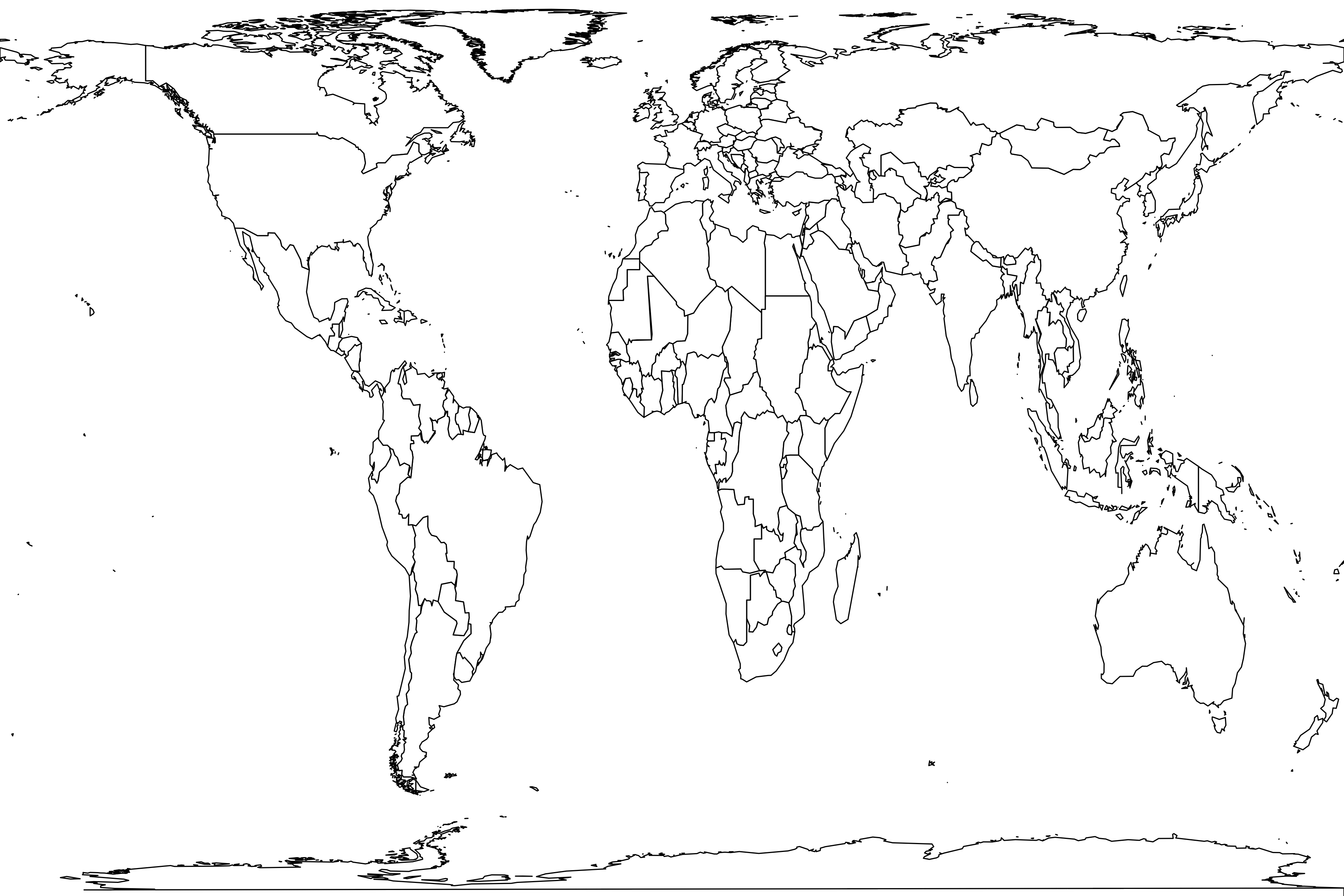
Geography comments: "Spitzkloof A Rockshelter is located in the northern hinterland of Namaqualand, otherwise known as the Richtersveld, in northwestern Northern Cape province, South Africa. The site is 30 km inland from the Atlantic Ocean and 30 km south of the Orange River".
The lower MIS 3 layer has radiocarbon dates of 52, 150 ± 800 and 51, 150 ± 850 years BP.
The lower MIS 3 layer has radiocarbon dates of 52, 150 ± 800 and 51, 150 ± 850 years BP.
Environment
Lithology: sandstone
Taphonomic context: human accumulation, rock shelter
Archaeology: stone tools, other artifacts
Habitat comments: "The rockshelter is one of three consecutive dome-shaped hollows eroded from a folded outcrop of quartzite from the Stinkfontein subgroup".
"The uppermost MIS 3 layer (Brian) consists of course sandy silt with gritty pebbles. This layer included nine spits as it encompassed a large rockfall. Most spits were rich in artefacts; two burnt ostrich eggshell bead preforms/rough outs were also found in this layer".
"The assemblage represents a subsistence strategy that suggests an opportunistic and broad diet, with people also hunting the highest ranked or largest species".
"The uppermost MIS 3 layer (Brian) consists of course sandy silt with gritty pebbles. This layer included nine spits as it encompassed a large rockfall. Most spits were rich in artefacts; two burnt ostrich eggshell bead preforms/rough outs were also found in this layer".
"The assemblage represents a subsistence strategy that suggests an opportunistic and broad diet, with people also hunting the highest ranked or largest species".
Methods
Life forms: carnivores, rodents, ungulates, other large mammals, other small mammals, birds, snakes, turtles, snails
Sampling methods: quarry, screenwash
Sample size: 149 specimens
Years: 2010
Net or trap nights: 0
Basal area status: not applicable
Sampling comments: "Excavation began in April 2010 by establishing a two-by-two m2 grid near the top of the deposit. Three square meters were excavated in a step-like fashion, using standard archaeological methods".
"The sediment was sieved through both 1 mm and 3 mm mesh".
"The sediment was sieved through both 1 mm and 3 mm mesh".
Metadata
Sample no: 3991
Contributor no: Benjamin Carter
Enterer: Benjamin Carter
Created: 2022-08-30 13:16:06
Modified: 2023-05-30 01:55:38
Abundance distribution
Each square represents a species. Square sizes are proportional to counts. Values are logged.
Statistics
14 species
4 singletons
total count 149
geometric series index: 28.1
Fisher's α: 3.786
geometric series k: 0.7045
Hurlbert's PIE: 0.5596
Shannon's H: 1.3634
Good's u: 0.9735
Register
| Canis mesomelas (black-backed jackal) | 2 | 7.9 kg |
| also 1 Carnivora indet. | ||
| Lepus capensis | 1 | |
| Bathyergus janetta | 2 | |
| Procavia capensis (rock hyrax) | 1 | 2.8 kg |
| Raphicerus campestris (steenbok) | 2 | 9.7 kg |
| Oreotragus oreotragus (klipspringer) | 1 | |
| Sylvicapra grimmia (common duiker) | 3 | 13.0 kg |
| Antidorcas marsupialis (springbok) | 1 | 40.0 kg |
| Oryx gazella (gemsbok) | 2 | 195.0 kg |
| also 34 Bovidae indet. | ||
| Psammobates tentorius trimeni | 24 | |
| Chersina angulata | 95 | |
| also 792 Testudinidae indet. | ||
| Aves indet. | 4 | |
| Serpentes indet. | 7 | |
| Gastropoda indet. | 4 | |