
Diouboye
Basic information
Sample name: Diouboye
Reference: S. A. Dueppen and C. Gokee. 2014. Hunting on the margins of medieval West African states: a preliminary study of the zooarchaeological record at Diouboye, Senegal. Azania: Archaeological Research in Africa 49(3):354-385 [ER 3766]
Geography
Country: Senegal
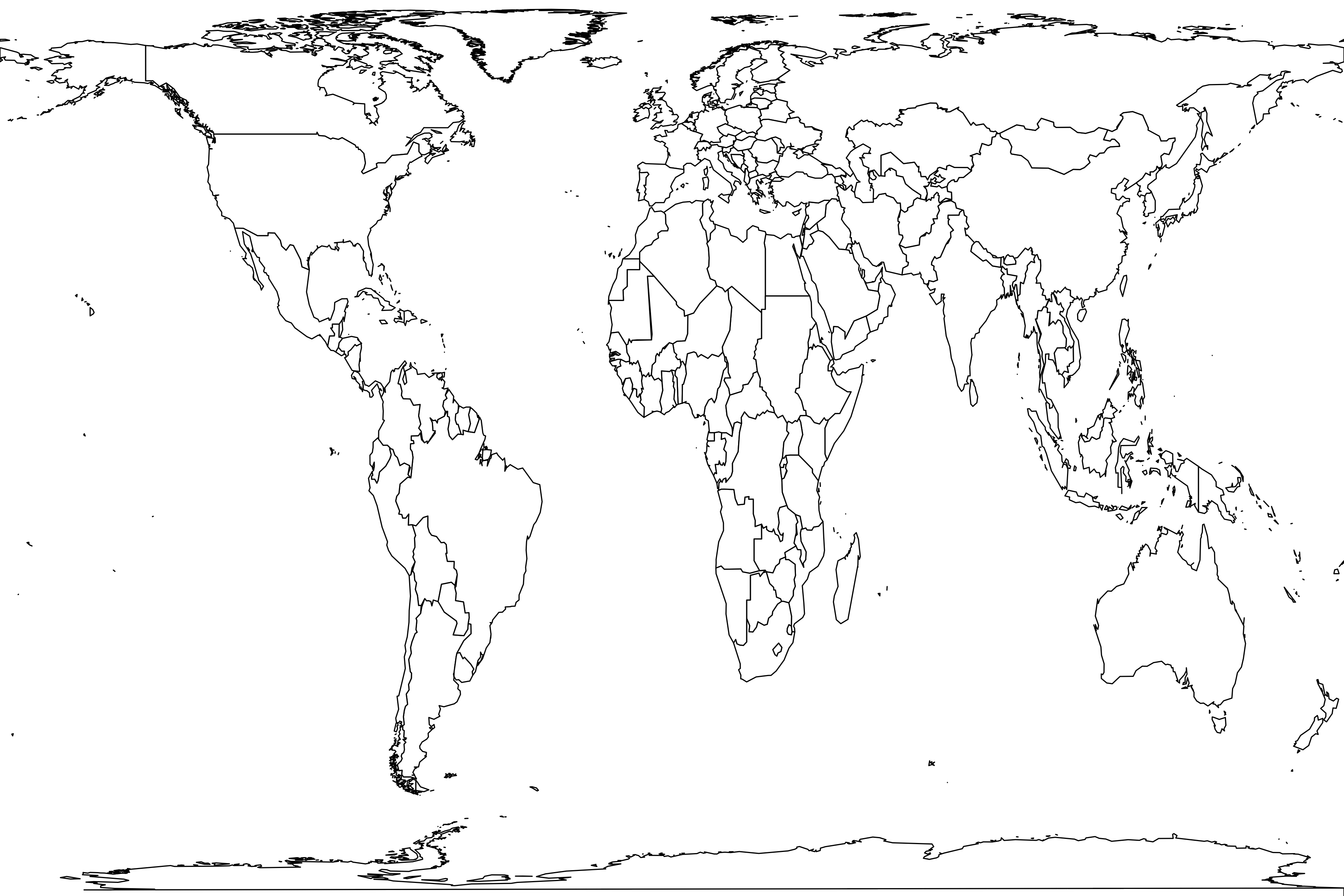
Coordinate: 14° 0' N, 13° 30' W
Latlng basis: estimated from map
Time interval: Holocene
Max Ma: 0.00095
Min Ma: 0.00055
Age basis: radiocarbon (calibrated)
Geography comments: "Diouboye is a linear series of low mounds situated some 500 metres east of the Falémé River in present-day Senegal. The site is located south of the Falémé's junction with the Senegal River (50 km upstream of the town of Bakel)".
"A series of eleven radiocarbon dates on charcoal and millet seeds from all six excavated areas shows that the site was first settled around AD 1000 and abandoned sometime between AD 1300 and 1400".
"A series of eleven radiocarbon dates on charcoal and millet seeds from all six excavated areas shows that the site was first settled around AD 1000 and abandoned sometime between AD 1300 and 1400".
Environment
Lithology: claystone
Taphonomic context: human accumulation, settlement
Archaeology: ceramics, hearths, metal tools, stone tools, other artifacts, other structures
Habitat comments: "Diouboye is dispersed over an area of 12.5 ha and lies at the centre of a settlement system that includes 19 homestead and hamlet sites. Twelve residential areas, some lightly mounded, and four non-residential areas were defined, including two possible middens and two zones formed by post-depositional disturbance. The residential areas comprise concentrations of pottery sherds, ground stone implements and stone features variously interpreted as pot rests, granary bases, hut foundations and possible drying platforms. Compact living surfaces exposed through excavation featured informal hearths with oxidised soil and ash lenses, earthen wall stubs and circular and linear stone foundations similar to those covering the site. Four living surfaces presented cylindrical pits (0.7–1.4 m in diameter) dug by the residents of Diouboye to depths of up to 0.9 m".
"Artefacts from both excavation and surface contexts suggest that daily life within Diouboye revolved around a suite of subsistence, craft and exchange activities. Imported objects, such as glass and carnelian beads, copper ornaments and cowry shells, all attest to participation in long-distance exchange networks. Clear direct evidence for local craft production was slim, but several terracotta spindle whorls, a possible potter’s hand-wheel and a vitrified conical crucible suggest that the occupants of Diouboye may have woven cloth, made pottery and even worked soft metals, either copper or gold. Although the origin of the iron tools remains unknown, these included harpoons and blades, ostensibly for procuring fish and wild game. Ground stone implements and chipped stone debris further hint at plant and animal processing activities".
"Artefacts from both excavation and surface contexts suggest that daily life within Diouboye revolved around a suite of subsistence, craft and exchange activities. Imported objects, such as glass and carnelian beads, copper ornaments and cowry shells, all attest to participation in long-distance exchange networks. Clear direct evidence for local craft production was slim, but several terracotta spindle whorls, a possible potter’s hand-wheel and a vitrified conical crucible suggest that the occupants of Diouboye may have woven cloth, made pottery and even worked soft metals, either copper or gold. Although the origin of the iron tools remains unknown, these included harpoons and blades, ostensibly for procuring fish and wild game. Ground stone implements and chipped stone debris further hint at plant and animal processing activities".
Methods
Life forms: carnivores, primates, rodents, ungulates, other small mammals, birds, lizards, turtles, other reptiles, frogs, fishes, clams, snails
Sampling methods: quarry, screenwash, surface
Sample size: 259 specimens
Years: 2008 - 2009
Net or trap nights: 0
Basal area status: not applicable
Sampling comments: "Excavations in 2008 and 2009 focused on comparing depositional sequences and material assemblages across a sample of seven residential areas and two non-residential areas. Excavations proceeded within 2 × 2 m grid units according to natural stratigraphy, with thicker depositional layers subdivided at arbitrary 10 cm levels. All deposits were screened through 2 mm mesh and systematic flotation samples were collected".
"In total, the Diouboye faunal assemblage includes 47.4 kg of bone from 51.71 m3 of deposit; approximately 1 kg per m3 of excavated volume. Due to the large size of the assemblage, a sample of 54 "field specimen" contexts was selected for the faunal analysis, representing an array of depositional and feature types and distributed among the six excavation areas".
"In total, the Diouboye faunal assemblage includes 47.4 kg of bone from 51.71 m3 of deposit; approximately 1 kg per m3 of excavated volume. Due to the large size of the assemblage, a sample of 54 "field specimen" contexts was selected for the faunal analysis, representing an array of depositional and feature types and distributed among the six excavation areas".
Metadata
Sample no: 4029
Contributor no: Benjamin Carter
Enterer: Benjamin Carter
Created: 2022-10-26 13:37:34
Modified: 2022-10-26 02:50:31
Abundance distribution
Each square represents a species. Square sizes are proportional to counts. Values are logged.
Statistics
39 species
13 singletons
total count 259
geometric series index: 75.5
Fisher's α: 12.747
geometric series k: 0.9188
Hurlbert's PIE: 0.9429
Shannon's H: 3.1241
Good's u: 0.95
Register
| Bos taurus (cow) | 25 | |
| also 95 Bovidae indet. | ||
| Caprinae indet. | 17 | |
| "Capra hircus/Ovis aries" | ||
| Cephalophus rufilatus (red-flanked duiker) | 2 | 12.0 kg |
| also 23 Aegodontia indet. "Bush duiker/Oribi" | ||
| Redunca redunca (Bohor reedbuck) | 22 | 44.0 kg |
| Kobus kob (kob) | 22 | 77.0 kg |
| Tragelaphus scriptus (harnessed bushbuck) | 19 | 31.0 kg |
| Hippotragus equinus (roan) | 3 | 246.0 kg |
| Kobus ellipsiprymnus (waterbuck) | 2 | 210.0 kg |
| Syncerus caffer (African buffalo) | 3 | 548.0 kg |
| Phacochoerus africanus (common warthog) | 11 | 82.0 kg |
| Hippopotamus amphibius (hippopotamus) | 11 | 1107.0 kg |
| Loxodonta africana (African bush elephant) | 1 | 2731.0 kg |
| Cercopithecinae indet. | 1 | |
| Cricetomys gambianus | 2 | 1.4 kg |
| Lepus sp. | 1 | |
| Canis lupus familiaris (gray wolf) | 8 | 43.0 kg |
| Canis adustus (side-striped jackal) | 2 | 9.8 kg |
| Lycaon pictus (African wild dog) | 4 | 26.0 kg |
| Felis lybica (African wildcat) | 2 | 4.5 kg |
| "Felis silvestris": species assignment based on geography | ||
| Leptailurus serval (serval) | 1 | |
| Panthera pardus (leopard) | 6 | |
| Herpestidae indet. | 3 | |
| also 6 Carnivora indet. | ||
| Numida meleagris | 1 | 1.3 kg |
| also 26 Phasianoidea indet. "Chicken/Guinea fowl/Francolin" | ||
| Anatidae indet. | 1 | |
| Crocodylus sp. | 19 | |
| Varanus sp. | 7 | |
| also 2 Lacertilia indet. | ||
| Trionyx triunguis | 12 | |
| also 1 Testudines indet. | ||
| Anura indet. | 1 | |
| Achatinidae indet. | 2 | |
| Chambardia sp. | 1 | |
| Etheria elliptica | 1 | |
| also 19 Bivalvia indet. | ||
| Lates niloticus | 20 | |
| Tilapia sp. | 1 | |
| also 3 Percomorpha indet. "Nile perch/Tilapia" | ||
| Synodontis sp. | 11 | |
| Auchenoglanis sp. | 3 | |
| Clarias sp. | 8 | |
| Bagrus sp. | 1 | |
| Arius gigas | 1 | |
| Chrysichthys sp. | 1 | |
| also 3 Siluriformes indet. | ||