
Mocun Cave
Basic information
Sample name: Mocun Cave
Reference: Y. Fan, Q. Shao, A.-M. Bacon, W. Liao, and W. Wang. 2022. Late Pleistocene large-bodied mammalian fauna from Mocun cave in south China: Palaeontological, chronological and biogeographical implications. Quaternary Science Reviews 294(107741):1-18 [ER 3782]
Geography
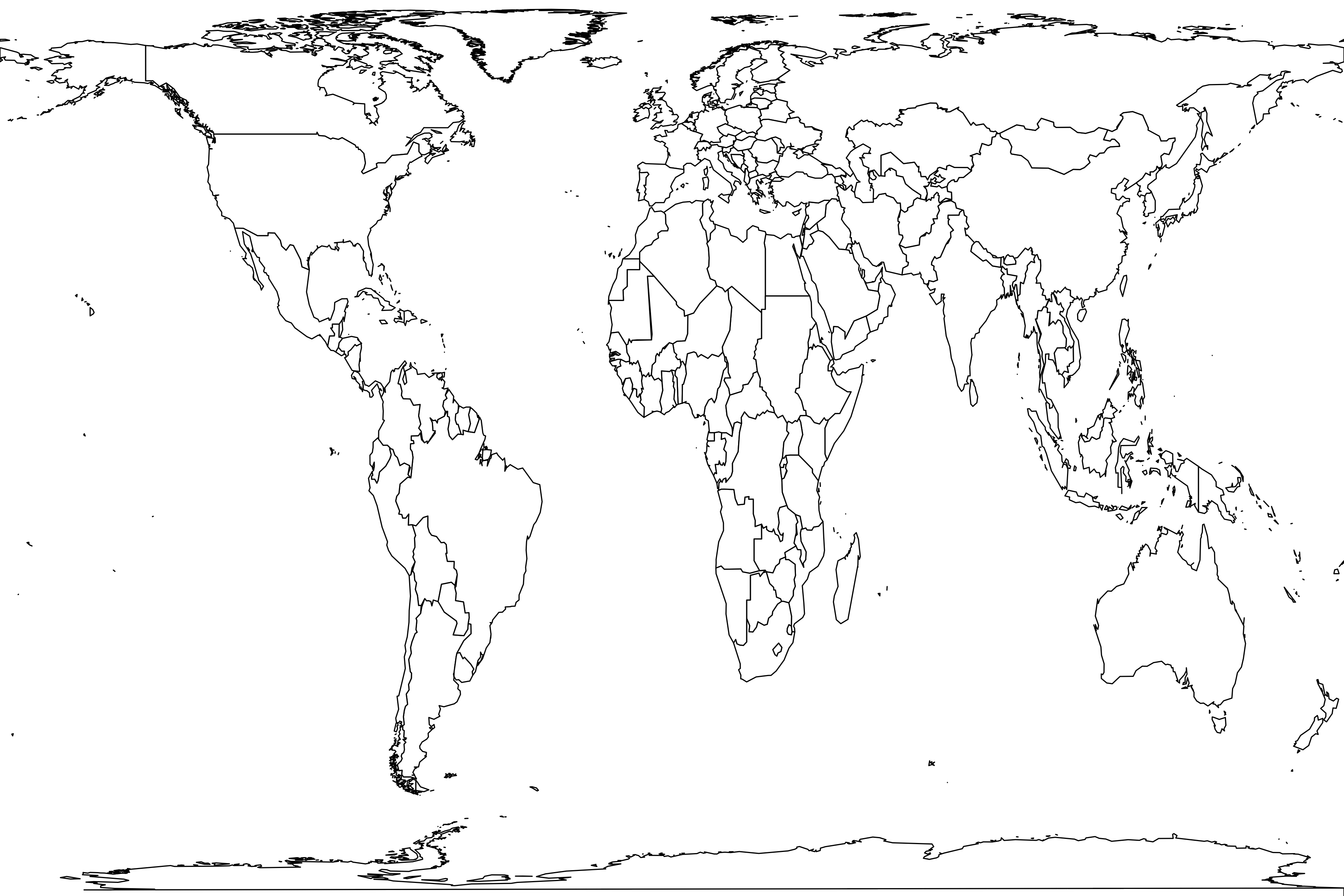
Country: China
State: Guangxi
Coordinate: 23° 0' 15" N, 110° 53' 11" E
Latlng basis: stated in text
Time interval: Late Pleistocene
Max Ma: 0.101066
Min Ma: 0.02707
Age basis: U/Th
Geography comments: "about 500 m southwest of the Mocun Village, Pubei, Qinzhou"
there are three U-series dates on L7 and ten on L8 ranging from 27, 070 ka (L7) to 101, 066 ka (lower L8)
there are three U-series dates on L7 and ten on L8 ranging from 27, 070 ka (L7) to 101, 066 ka (lower L8)
Environment
Lithology: claystone
Taphonomic context: cave, fluvial deposit, pitfall trap, rodent accumulation
Habitat comments: "more likely a fissure deposit"
the material is from layers L7 ("Light brown loose sandy clay") and L8 ("Brown sandy clay")
there are "mostly isolated teeth" and "few bone fragments without any complete long bones" and there are "either gnawed or rounded marks" on the specimens
there are no "human fossils or artefacts"
"rodents were the last accumulator agents before burial" but the material is mostly water-transported, and some specimens "most likely dropped and trapped"
the material is from layers L7 ("Light brown loose sandy clay") and L8 ("Brown sandy clay")
there are "mostly isolated teeth" and "few bone fragments without any complete long bones" and there are "either gnawed or rounded marks" on the specimens
there are no "human fossils or artefacts"
"rodents were the last accumulator agents before burial" but the material is mostly water-transported, and some specimens "most likely dropped and trapped"
Methods
Life forms: carnivores, primates, rodents, ungulates
Sampling methods: quarry
Sample size: 527 specimens
Years: 2000
Net or trap nights: 0
Basal area status: not applicable
Sampling comments: the excavation was "in an area of about 5 m2, and excavated by intervals of 10 cm"
"50 kg of sediments were water-screened to collect micromammals using 35 mm mesh sieves" but only the teeth of the "medium-large mammals" are reported here
"50 kg of sediments were water-screened to collect micromammals using 35 mm mesh sieves" but only the teeth of the "medium-large mammals" are reported here
Metadata
Sample no: 4097
Contributor no: John Alroy
Enterer: John Alroy
Created: 2023-02-23 19:33:04
Modified: 2023-02-25 11:44:20
Abundance distribution
Each square represents a species. Square sizes are proportional to counts. Values are logged.
Statistics
26 species
4 singletons
total count 527
geometric series index: 39.0
Fisher's α: 5.738
geometric series k: 0.8249
Hurlbert's PIE: 0.8678
Shannon's H: 2.3759
Good's u: 0.9925
Register
| Macaca sp. | 97 | |
| Trachypithecus sp. | 2 | |
| Hylobates sp. | 2 | |
| Pongo sp. | 1 | |
| †Hystrix refossa | 32 | |
| "Hystrix magna" | ||
| Hystrix brachyura | 69 | |
| "Hystrix cf. subcristata" | ||
| †Stegodon orientalis (stegodont) | 6 | |
| Elephas maximus (Asian elephant) | 7 | 3711.0 kg |
| Arctonyx collaris (greater hog badger) | 3 | |
| compared to subspecies rostratus | ||
| Cuon sp. | 4 | |
| †Crocuta ultima (hyena) | 2 | |
| Viverra sp. | 4 | |
| Paradoxurus cf. hermaphroditus (Asian palm civet) | 1 | 2.4 kg |
| Neofelis nebulosa (clouded leopard) | 2 | |
| Ursus thibetanus (Asian black bear) | 18 | |
| Ailuropoda sp. | 2 | |
| Rhinoceros sp. | 31 | |
| †Tapirus cf. sinensis (tapir) | 1 | |
| †Tapirus augustus (tapir) | 8 | |
| "Megatapirus augustus" | ||
| Sus scrofa (pig) | 123 | |
| †Sus cf. xiaozhu (pig) | 1 | |
| Muntiacus cf. reevesi (Reeves's muntjac) | 11 | 11.0 kg |
| Muntiacus vaginalis (northern red muntjac) | 64 | |
| "Muntiacus muntjak" | ||
| Cervus unicolor (sambar deer) | 21 | |
| "Rusa unicolor" | ||
| Bos (Bibos) sp. | 13 | |
| Caprinae indet. | 2 | |