
Equus Cave (Unit 2A)
Basic information
Sample name: Equus Cave (Unit 2A)
Reference: R. G. Klein, K. Cruz-Uribe, and P. B. Beaumont. 1991. Environmental, ecological, and paleoanthropological implications of the late Pleistocene mammalian fauna from Equus Cave, northern Cape Province, South Africa. Quaternary Research 36(1):94-119 [ER 3107]
Geography
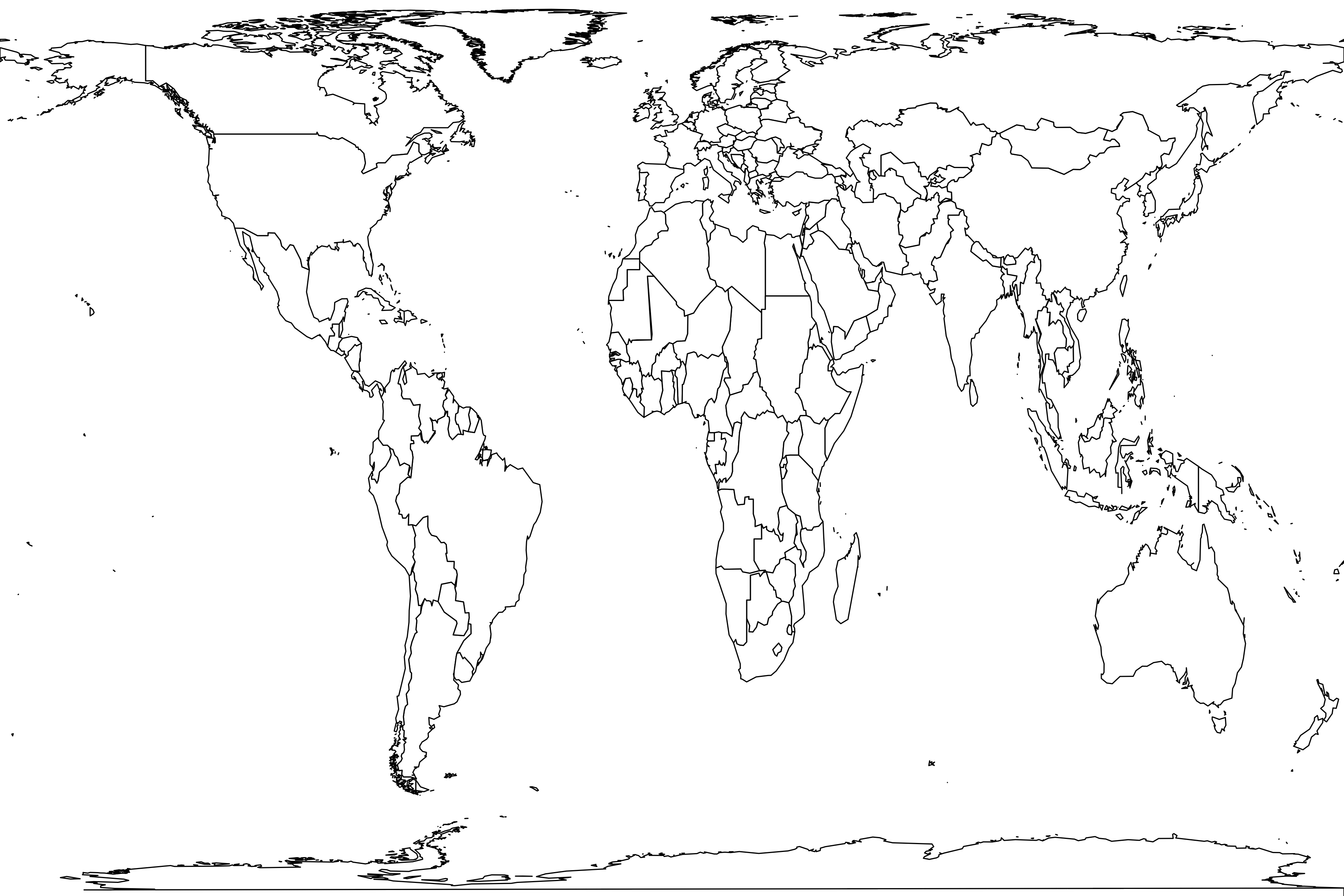
Country: South Africa
State: North West
Coordinate: 28° 37' S, 25° 37' E
Latlng basis: stated in text
Time interval: Late Pleistocene
Section: 3107
Unit number: 3
Unit order: above to below
Max Ma: 0.103
Min Ma: 0.0327
Age basis: radiocarbon (uncalibrated)
Geography comments: "Equus Cave is located on the Gaap Escarpment at Norlim (formerly Buxton), near Taung in the northern Cape Province (now North West) of South Africa".
"Occasional artifacts of Middle Stone Age (MSA) aspect suggest that Units 1B-2B are older than 30, 000-40, 000 yr B.P. Organic residues extracted from bones in the upper part of 2B have been radiocarbon dated to 16, 000 +/- 160 yr B.P., having likely been contaminated by younger carbon. Geomorphic evidence suggests that Units 1B-2B were deposited sometime between 103, 000 and 32, 700 yr B.P."
"Occasional artifacts of Middle Stone Age (MSA) aspect suggest that Units 1B-2B are older than 30, 000-40, 000 yr B.P. Organic residues extracted from bones in the upper part of 2B have been radiocarbon dated to 16, 000 +/- 160 yr B.P., having likely been contaminated by younger carbon. Geomorphic evidence suggests that Units 1B-2B were deposited sometime between 103, 000 and 32, 700 yr B.P."
Environment
Lithology: sandstone
Taphonomic context: carnivore accumulation, cave
Habitat comments: "Units 1B through 2B comprise a comformable series of mainly reddish-brown, subhorizontal sandy loams with lenses of tufa grit".
"The paucity of artifacts, the absence of cut bones, hearths and other archeological features, the rarity of porcupine-gnawed bones, and the abundance of hyena coprolites imply that hyenas were the principal bone accumulators in Units 1B-2B".
"The paucity of artifacts, the absence of cut bones, hearths and other archeological features, the rarity of porcupine-gnawed bones, and the abundance of hyena coprolites imply that hyenas were the principal bone accumulators in Units 1B-2B".
Methods
Life forms: carnivores, primates, rodents, ungulates, other large mammals, other small mammals
Sampling methods: quarry
Sample size: 4265 specimens
Years: 1978, 1982
Net or trap nights: 0
Basal area status: not applicable
Sampling comments: "The first systematic excavations of Equus Cave took place in 1978 and were extended in 1982. A grid of squares 1 m on a side was laid down, and the excavation proceeded according to arbitrary 7.5-cm-deep levels or “spits” within four poorly defined natural stratigraphic units: lA, lB, 2A, and 2B".
Metadata
Sample no: 4236
Contributor no: Benjamin Carter
Enterer: Benjamin Carter
Created: 2023-04-20 14:00:34
Modified: 2023-04-29 01:04:53
Abundance distribution
Each square represents a species. Square sizes are proportional to counts. Values are logged.
Statistics
43 species
3 singletons
total count 4265
geometric series index: 51.0
Fisher's α: 6.651
geometric series k: 0.846
Hurlbert's PIE: 0.869
Shannon's H: 2.5496
Good's u: 0.9993
Register
| Atelerix frontalis | 2 | |
| "Erinaceus frontalis" | ||
| Leporidae indet. | 52 | |
| Pedetes capensis | 9 | 2.4 kg |
| Hystrix africaeaustralis | 19 | 15.0 kg |
| Papio ursinus (chacma baboon) | 47 | 20.0 kg |
| Homo sapiens (human) | 3 | 64.0 kg |
| Canis mesomelas (black-backed jackal) | 1122 | 7.9 kg |
| Vulpes chama (Cape fox) | 88 | 2.7 kg |
| Otocyon megalotis (bat-eared fox) | 16 | 3.2 kg |
| 419 Vulpini indet. "Cape/bat-eared fox" | ||
| Lycaon pictus (African wild dog) | 25 | 26.0 kg |
| Mellivora capensis (honey badger) | 8 | 7.7 kg |
| Aonyx capensis (African clawless otter) | 6 | 14.0 kg |
| Genetta sp. | 2 | |
| Cynictis penicillata | 19 | 910.0 g |
| Suricata suricatta | 1 | 663.0 g |
| Crocuta crocuta (spotted hyena) | 29 | 66.0 kg |
| 214 Hyaenidae indet. | ||
| Parahyaena brunnea (brown hyena) | 151 | |
| "Hyaena brunnea" | ||
| Felis lybica (African wildcat) | 18 | 4.5 kg |
| also 47 Felis sp. "Wildcat/black-footed cat" | ||
| Caracal caracal (caracal) | 86 | |
| "Felis caracal" | ||
| Panthera leo (lion) | 15 | 147.0 kg |
| Panthera pardus (leopard) | 14 | |
| Acinonyx jubatus (cheetah) | 1 | 42.0 kg |
| 27 Felinae indet. "Leopard/cheetah" | ||
| Orycteropus afer (aardvark) | 3 | 40.0 kg |
| Procavia capensis (rock hyrax) | 65 | 2.8 kg |
| Equus quagga burchellii (plains zebra) | 389 | |
| "Equus burchellii" | ||
| †Equus capensis (horse) | 41 | |
| Diceros bicornis (black rhinoceros) | 5 | |
| Hippopotamus amphibius (hippopotamus) | 1 | 1107.0 kg |
| Phacochoerus africanus (common warthog) | 37 | 82.0 kg |
| "Phacochoerus aethiopicus" | ||
| Taurotragus oryx (common eland) | 6 | |
| Tragelaphus strepsiceros (greater kudu) | 8 | 189.0 kg |
| Hippotragus sp. | 36 | |
| Kobus leche (lechwe) | 29 | |
| Redunca fulvorufula (mountain reedbuck) | 109 | 29.0 kg |
| Pelea capreolus (grey rhebok) | 73 | 16.0 kg |
| †Megalotragus priscus | 9 | |
| Damaliscus pygargus phillipsi (bontebok) | 240 | |
| "Damaliscus dorcas" | ||
| Connochaetes taurinus (blue wildebeest) | 44 | 202.0 kg |
| 209 Alcelaphinae indet. | ||
| Antidorcas marsupialis (springbok) | 489 | 40.0 kg |
| †Antidorcas bondi (bovid) | 754 | |
| Raphicerus campestris (steenbok) | 180 | 9.7 kg |
| Sylvicapra grimmia (common duiker) | 10 | 13.0 kg |
| Syncerus caffer (African buffalo) | 4 | 548.0 kg |