
Lemoyne Quarry
Basic information
Sample name: Lemoyne Quarry
Sample aka: UNSM Kh-101; UW V-69015
Reference: M. B. Leite. 1990. Stratigraphy and mammalian paleontology of the Ash Hollow Formation (Upper Miocene) on the north shore of Lake McConaughy, Keith County, Nebraska. University of Wyoming Contributions to Geology 28(1):1-29 [ER 4181]
Geography
Country: United States
State: Nebraska
County: Keith
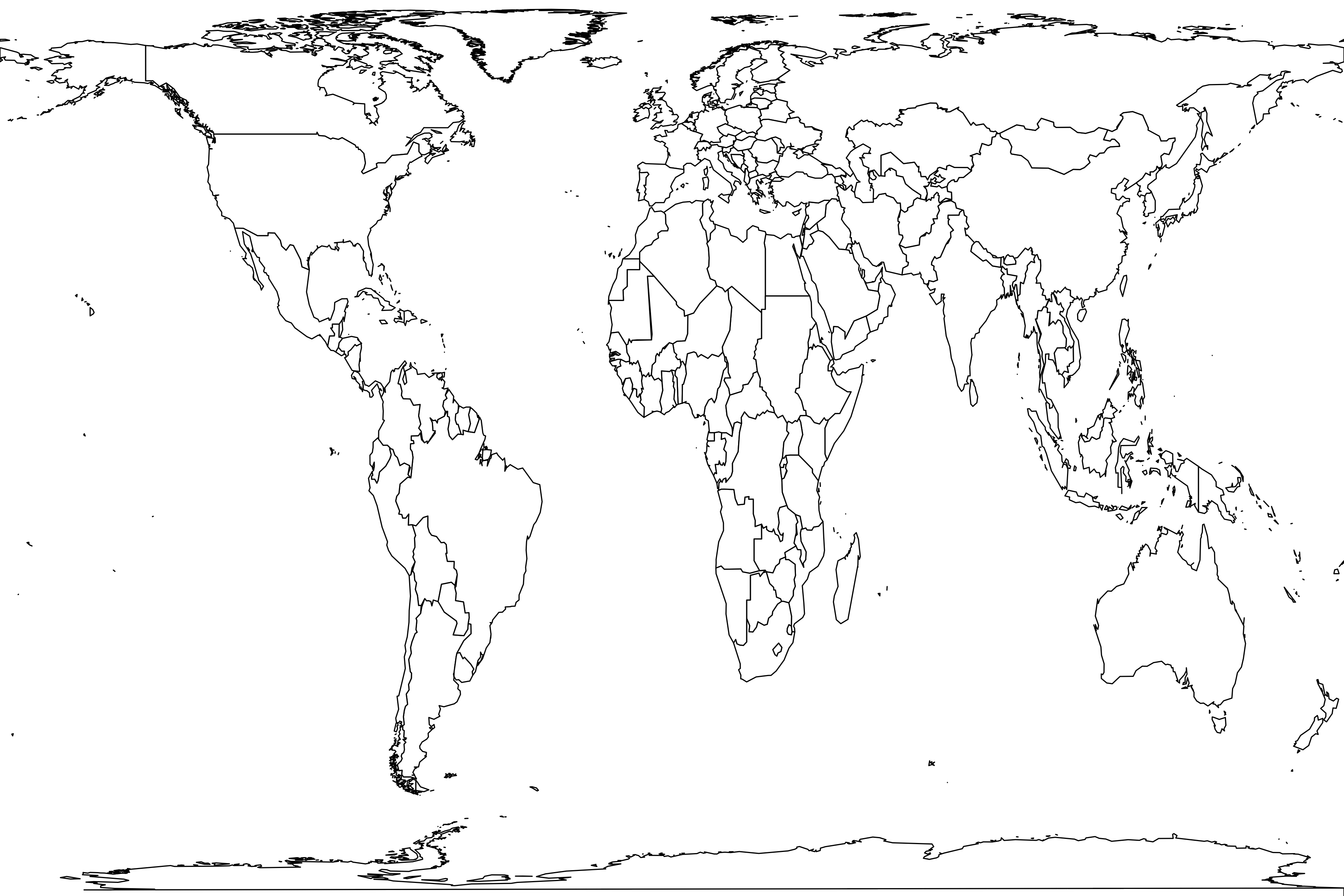
Coordinate: 41.29° N, -101.89° W
Latlng basis: estimated from map
Scale: quarry
Formation: Ash Hollow
Time interval: Late Miocene
Zone: Clarendonian
Section: Lake McConaughy
Unit number: 2
Unit order: below to above
Ma: 9.5
Age basis: AEO
Geography comments: shown in Fig. 2 as near the center of the southern edge of Sec. 3, T. 15 N., R. 40 W.
said to be "very late early Hemphillian"
said to be "very late early Hemphillian"
Environment
Lithology: claystone
Taphonomic context: lake deposit
Habitat comments: "Diatomaceous claystone... comprises the fossiliferous interval": it is homogeneous due to "extensive bioturbation" and represents "a lacustrine environment"
there is "abundant evidence of damage from carnivores" such as punctures and "grooving and scalloping of the edges by gnawing"
there were "only two examples of articulation" presumed to be due to "feeding activity of carnivores"
there is "abundant evidence of damage from carnivores" such as punctures and "grooving and scalloping of the edges by gnawing"
there were "only two examples of articulation" presumed to be due to "feeding activity of carnivores"
Methods
Life forms: carnivores, ungulates, other large mammals
Excluded forms: rodents, other small mammals, birds, fishes
Sampling methods: quarry, screenwash
Sample size: 113 specimens
Years: 1968 - 1972
Museum: University of Nebraska State Museum; University of Wyoming
Net or trap nights: 0
Basal area status: not applicable
Sampling comments: "discovered by K. A. Richey... in 1968 during construction of Nebraska State Highway 92" and there was "Intensive investigation by UNSM personnel during the 1969 and 1970 field seasons... Field parties from the University of Wyoming collected at Lemoyne Quarry during 1971 and 1972" but only one UW specimen is listed
there was "efficient hand-quarrying" and also "screening in the 1985 field season"
only the large mammals are inventoried: a single rodent was described by Martin (1975) and the insectivores by Bown (1980), and "fishes, amphibians, reptiles, and birds" are also present
there was "efficient hand-quarrying" and also "screening in the 1985 field season"
only the large mammals are inventoried: a single rodent was described by Martin (1975) and the insectivores by Bown (1980), and "fishes, amphibians, reptiles, and birds" are also present
Metadata
Sample no: 4644
Contributor no: John Alroy
Enterer: John Alroy
Created: 2025-01-07 10:38:34
Modified: 2025-01-07 10:38:34
Abundance distribution
Each square represents a species. Square sizes are proportional to counts. Values are logged.
Statistics
20 species
3 singletons
total count 113
geometric series index: 30.9
Fisher's α: 7.057
geometric series k: 0.8479
Hurlbert's PIE: 0.9064
Shannon's H: 2.6564
Good's u: 0.9738
Register
| Megalonyx sp. | 1 | |
| Epicyon validus = †Epicyon cf. haydeni (bone-crushing dog) | 3 | |
| see also Wang et al. (1999) | ||
| Borophagus sp. | 3 | |
| "cf. Osteoborus sp." | ||
| †Vulpes cf. stenognathus (fox) | 11 | |
| Mustela sp. | 4 | |
| cf.: "sensu lato" | ||
| Nimravides sp. | 2 | |
| cf. | ||
| Gomphotheriidae indet. | 1 | |
| †Aphelops cf. mutilus (rhinoceros) | 1 | |
| †Teleoceras cf. hicksi (rhinoceros) | 14 | |
| "Teleoceras cf. fossiger": compared closely to "Teleoceras schultzi" from Cambridge, which is Teleoceras hicksi according to Prothero (pers. commun.) | ||
| †Neohipparion eurystyle (horse) | 23 | |
| Nannippus sp. | 2 | |
| †Pliohippus nobilis (horse) | 5 | |
| Calippus sp. | 7 | |
| said to be new | ||
| Tayassuinae indet. | 3 | |
| "Prosthennops sp.": compared to Prosthennops graffhami | ||
| Hemiauchenia sp. | 4 | |
| Alforjas sp. | 5 | |
| †Megatylopus cf. gigas | 5 | |
| Pseudoceras sp. | 6 | |
| Pediomeryx (Yumaceras) sp. | 3 | |
| Texoceros sp. | 10 | |
| cf. | ||