
Aramis Locality 6
Basic information
Sample name: Aramis Locality 6
Sample aka: ARA-VP-6
Reference: T. D. White, S. H. Ambrose, G. Suwa, D. F. Su, D. DeGusta, R. L. Bernor, J.-R. Boisserie, M. Brunet, E. Delson, S. Frost, N. Garcia, I. X. Giaourtsakis, Y. Haile-Selassie, F. C. Howell, T. Lehmann, A. Likius, C. Pehlevan, H. Saegusa, G. Semprebon, M. Teaford, and E. Vrba. 2009. Macrovertebrate paleontology and the Pliocene habitat of Ardipithecus ramidus. Science 326:87-93 [ER 4407]
Geography
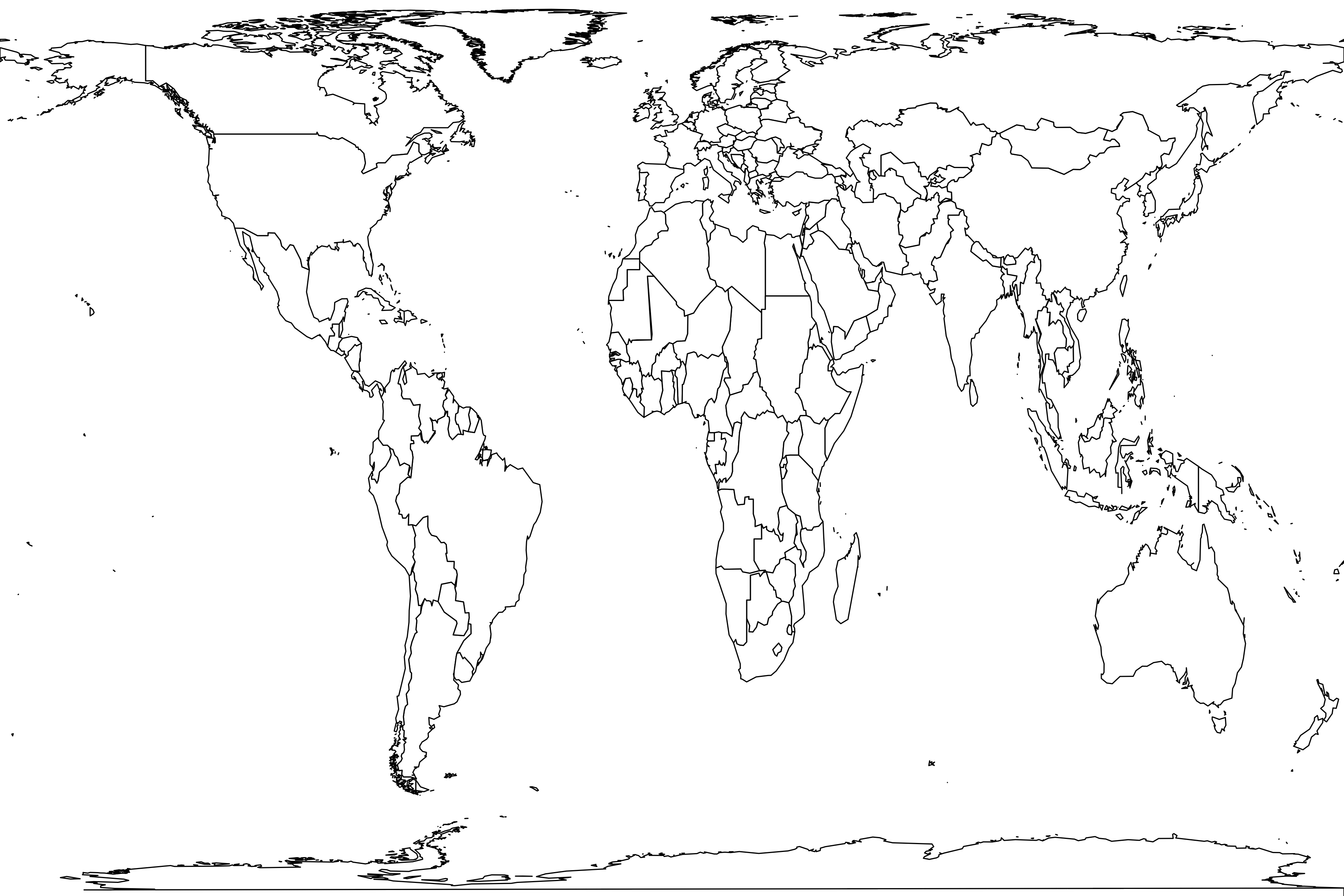
Country: Ethiopia
Coordinate: 10.477° N, 40.443° E
Latlng basis: estimated from map
Scale: quarry
Formation: Sagantole
Time interval: Early Pliocene
Max Ma: 4.419
Min Ma: 4.416
Age basis: Ar-Ar
Geography comments: from the Lower Aramis Member of the Sagantole Formation in "the Central Awash Complex (CAC) of the Middle Awash study area" (WoldeGabriel et al. 2009)
the exact location is shown in Fig. 1 of WoldeGabriel et al. (2009
"The Aramis Member directly overlies the Gàala (Camel) Tuff Complex (GATC), which has a 40Ar/39Ar age of 4.419 ± 0.068 Ma" and is "overlain by the Daam Aatu (Baboon) Basaltic Tuff (DABT), which has a 40Ar/39Ar age of 4.416 ± 0.031 Ma" (WoldeGabriel et al. 2009)
the exact location is shown in Fig. 1 of WoldeGabriel et al. (2009
"The Aramis Member directly overlies the Gàala (Camel) Tuff Complex (GATC), which has a 40Ar/39Ar age of 4.419 ± 0.068 Ma" and is "overlain by the Daam Aatu (Baboon) Basaltic Tuff (DABT), which has a 40Ar/39Ar age of 4.416 ± 0.031 Ma" (WoldeGabriel et al. 2009)
Environment
Lithology: claystone
Taphonomic context: overbank deposit, bird accumulation
Habitat comments: the member consists of "silt, clay, and sand of variable thickness and induration, deposited on a floodplain" (WoldeGabriel et al. 2009) and the fossils are specically from "alluvial silty clay" according to White et al. (2009)
a "partially in situ" skeleton of Ardipithecus ramidus was collected, but most material was disassociated (Louchart et al. 2009)
there is no evidence of "hydraulic transport" but is marking of bone by mammalian carnivores, crocodiles, rodents, and insects, and "many of the microvertebrate remains [in the two main quarries] may have been disaggregated from barn owl (Tyto) pellets" (Louchart et al. 2009)
a "partially in situ" skeleton of Ardipithecus ramidus was collected, but most material was disassociated (Louchart et al. 2009)
there is no evidence of "hydraulic transport" but is marking of bone by mammalian carnivores, crocodiles, rodents, and insects, and "many of the microvertebrate remains [in the two main quarries] may have been disaggregated from barn owl (Tyto) pellets" (Louchart et al. 2009)
Methods
Life forms: carnivores, primates, ungulates, other large mammals
Excluded forms: rodents, birds, lizards, snakes, frogs, scarab beetles
Sampling methods: quarry, screenwash
Sample size: 326 specimens
Net or trap nights: 0
Basal area status: not applicable
Sampling comments: quarried and collected by "team crawls" and by "water-sieving" (Louchart et al. 2009)
indeterminate bovids identified to tribe are also enumerated
"Remains of lizards, snakes, and frogs were recovered, particularly at the ARA-VP-6 microfauna quarry" and fish, crocs, and turtles are also present in the member (WoldeGabriel et al. 2009)
White et al. (2009) also mention an Aquila "and other birds", and small mammals are present according to Louchart et al. (2009)
fossil wood, pollen, gastropods, a centipede, dung beetle broodballs and a nest, and coprolites are discussed by WoldeGabriel et al. (2009)
indeterminate bovids identified to tribe are also enumerated
"Remains of lizards, snakes, and frogs were recovered, particularly at the ARA-VP-6 microfauna quarry" and fish, crocs, and turtles are also present in the member (WoldeGabriel et al. 2009)
White et al. (2009) also mention an Aquila "and other birds", and small mammals are present according to Louchart et al. (2009)
fossil wood, pollen, gastropods, a centipede, dung beetle broodballs and a nest, and coprolites are discussed by WoldeGabriel et al. (2009)
Metadata
Sample no: 4685
Contributor no: John Alroy
Enterer: John Alroy
Modifier no: John Alroy
Created: 2025-08-30 06:38:44
Modified: 2025-08-30 06:46:12
Abundance distribution
Each square represents a species. Square sizes are proportional to counts. Values are logged.
Statistics
27 species
9 singletons
total count 326
geometric series index: 53.1
Fisher's α: 6.988
geometric series k: 0.8497
Hurlbert's PIE: 0.8581
Shannon's H: 2.3054
Good's u: 0.9725
Register
| Hippopotamidae indet. | 1 | |
| Cainochoerus sp. | 2 | |
| said to be new | ||
| †Kolpochoerus deheinzelini | 5 | |
| Nyanzachoerus jaegeri = †Notochoerus jaegeri | 1 | |
| †Nyanzachoerus kanamensis | 2 | |
| Neotragini indet. | 11 | |
| Aepyceros sp. | 4 | |
| cf. | ||
| Damalops sp. | 2 | |
| Simatherium sp. | 1 | |
| cf. | ||
| †Ugandax cf. gautieri | 6 | |
| †Tragelaphus cf. moroitu (bovid) | 64 | |
| referred to in the table as "Tragelaphus kyloae" (a nomen nudum) | ||
| Praedamalis sp. | 1 | |
| Kobus sp. | 1 | |
| "Kobus preoricornis" (an apparent nomen nudum) | ||
| Giraffa sp. | 3 | |
| Hyaenidae indet. | 28 | |
| Lutra sp. | 1 | |
| cf. | ||
| Torolutra sp. | 1 | |
| cf. | ||
| Dinofelis sp. | 2 | |
| cf. | ||
| Felis ""small"" | 3 | |
| Felis ""medium"" | 2 | |
| also 1 "Felis indet." | ||
| Machairodus sp. | 1 | |
| Panthera sp. | 1 | |
| Eurygnathohippus sp. | 8 | |
| †Pliopapio alemui | 55 | |
| †Kuseracolobus aramisi | 69 | |
| †Ardipithecus ramidus | 45 | |
| Orycteropus sp. | 6 | |